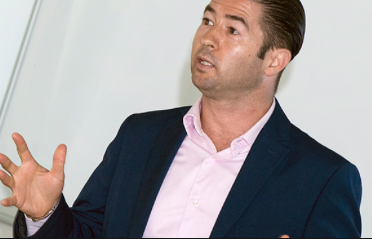
Guest article by Tor W. Andreassen.

“When the tide goes out, you know who’s been swimming naked!”

When I came to the field of service research in the mid 1990s, Disney, Nordstrom, Southwest airlines, Ritz Carlton hotels, were in the vogue as “best case” examples to learn from. Today they all experience financial difficulties. What happened? 

Three factors come to mind:

  1. Service quality and customer satisfaction is not the only predictors of success.
  2. Technology has enabled new solutions and alternatives.
  3. Covid-19 has changed the rules of the game.

While the pandemic with its impact on mobility, social distancing, and change of social interaction, is a “Black swan” that no one could predict, technology is an area most service researchers and managers has neglected for too long. There are exceptions! 

In hindsight, I will claim that too many researchers got stuck in the traditional human interaction approach to creating, delivering, communicating, and capturing value reflected in “golden service models” like the GAP-model, the Service Pyramid, she Service Profit Chain, etc. They are still relevant in some cases, but they are gradually losing relevance in a digital economy. Let me be more specific.

The video-conferencing firm Zoom, who few had heard of before March 12th, is today worth more than USD50B. That is more than the combined value of most major airline companies like Southwest (14B), Delta (12B), United (6B), Lufthansa (4B), and IAG (4B). In fact, a look at the top 10 most valuable firms in the world, sends a strong message: They are primarily North American platform-based service firms. 

Relative to our “old service heroes”, platform companies are different in three distinct areas.
First, they are asset and employee light enabling them to scale their operations in a matter of seconds, with a marginal increase in costs.
Second, and because they are digital, they can collect vast amount of customer transaction data over time (e.g. search, purchase, logistics, payment) which they feed into advanced algorithms to be analyzed using artificial intelligence (AI) and machine learning (ML).
Third, relative to our “old service heroes”, platform firms have a different mix of employees with less focus on front line employees and more on back office staff. 

Let me use Airbnb as an example. Their market cap by October 2020 is about USD120B, which is 4x the value of Marriott, 6x Hilton, and close to 25x the value of Choice. If you compare number of Airbnb accommodations vs hotel guestrooms, the numbers are staggering: Airbnb 7M compared to Hyatt (0.2M), Wyndham (0.8M), Intercontinental (0.9M), Hilton (1.0M), and Marriott (1.4M). On the employee side, Airbnb’s share of engineering and information technology employees is 19 % compared to for example Hilton Worldwide 3%, and Marriott International 2%. Compared to late August 2019, the amount spent on Airbnb is up 75%. Professor Scott Galloway at Stern predicts that Airbnb will be the world largest actor within hospitality by 2021. 

Service researchers need to respond to the new rules of leadership of service firms.
First, the unrelenting pace of change is a harsh reality that every leader needs to contend with. According to KPMG, 65% of the leaders they interviewed worried about new entrants disrupting industry business models. This calls for research on agility, digital business models, digital innovations, and value creation.
Second, leaders of service firms need to relate to geopolitical risks like trade disputes or civil unrest and how this may impact their business’ bottom line independent of which industry you are in. This calls for a more global perspective on service research and rightly consider North American as a special context.
Third, leaders face the huge challenge of determining what the future of work will look like and what it will mean for their organizations. As service researchers we should focus on the combination of technology and employees with a view to nurture employee well-being.
Finally, firms are expected to help solve important societal issues and their leaders will be held accountable. According to Edelman Trust Barometer, 84% of people expect CEOs to inform conversations and policy debates on one or more pressing social issues, including jobs, the economy, automation, regulation, and globalization.

Today, leaders are expected by their board, employees, customers, and society to follow a set of commitments: deliver value to customers, invest in employees, deal fairly and ethically with suppliers, support communities, generate long-term value for shareholders based on in accordance with United Nation’s sustainability goals. Service research needs to follow suit and provide new insight to this complex and multifaceted service world. A place to start is to look at our history with new eyes and admit that technology and Covid-19 are forceful change agents requiring a new approach to old problems. We need to innovate or face irrelevance like most of our old service heroes.

Tor W. Andreassen
Professor of Innovation at NHH Norwegian School of Economics
Director for the research center Digital Innovation for sustainable Growth


Photo credit: Andrea Davis.

In our series “Your path into service” we ask this time, Parsu Parasuraman, how he got into service research.

Parsu Parasuraman was the James W. McLamore Chair in Marketing at the University of Miami and is currently the Pro-Chancellor (academics), Vijaybhoomi University, Greater Mumbai, India. He is co-author of many famous service concepts like SERVQUAL, Gap Model, Technological Readiness Index, the zone of tolerance, and more.

It is always interesting to see how different the backgrounds of our community members are.

Guest article by Charles Hofacker

It is really a privilege for me to have been asked to peck out some words at the old keyboard for SERVSIG. The honor is especially great given that services marketing folk are known far and wide as a coherent, well-established, active and impactful intellectual community within the larger field of marketing.

Perhaps there is some irony to someone asking me for these words. I started out my career doing CPG modeling. Whatever else we might say about consumer package goods, they pretty clearly fall into the tangible goods category. However, before the Ph.D. I had a job as a junior assistant computer programmer, which certainly counts as a service. Plus I put myself through my Ph.D. working the user services help desk at UCLA. So yeah, I punched a few punch cards doing service.

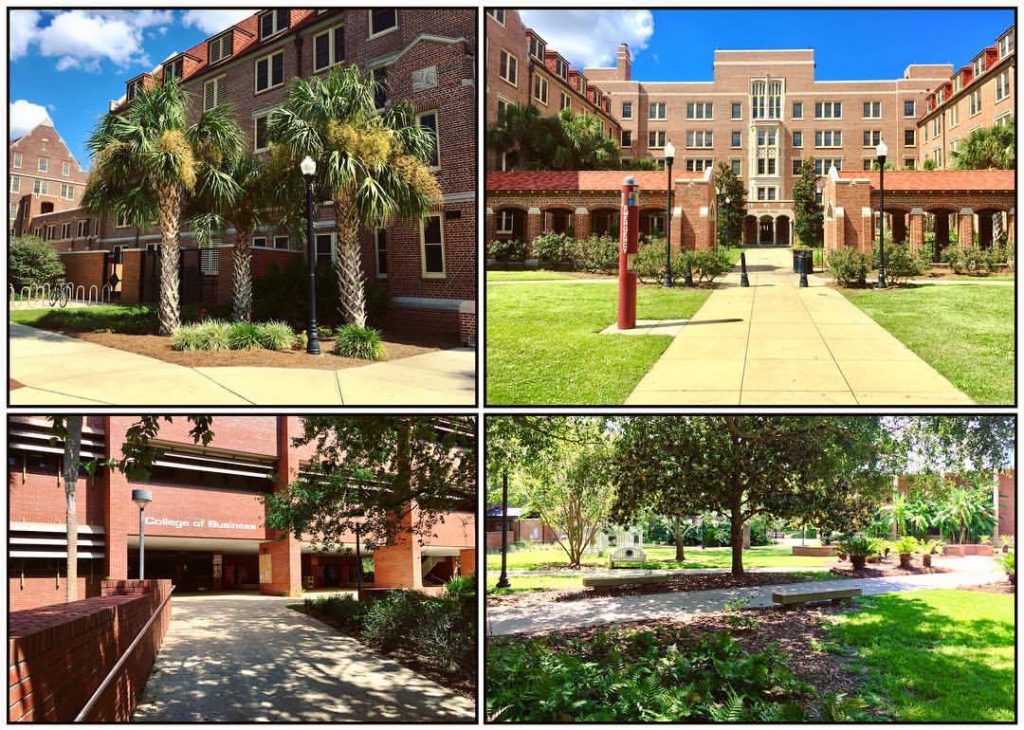
Of course, being at Florida State meant I was liable to end up with a services world view by osmosis. How much resistance to services could I offer with colleagues like Joe Cronin, Mike Brady, Martin Mende, Colleen Harmeling, and many students like Alexis Allen, Tom Baker, Stacy Robinson, and Clay Vorhees, among others? One could argue that even a modest yearly osmosis rate meant I would end up being services-oriented sooner or later.

As it happened, it occurred somewhere in the interim between sooner and later. One day Roland Rust put me on the ERB of JSR. He must have seen the inner service scholar in me that I had not particularly recognized in myself. The next thing I knew I was getting really interesting manuscripts to read. It taught me to pay attention to the service literature and to think a little differently about myself.

On another fateful day, I was reading Services Marketing by Zeithaml, Bitner, and Gremler. I am not really sure why I was reading that book, although I am susceptible to reading the occasional random textbook. But back to my story. At a certain point I ran into this quote, “An interesting way to look at the influence of technology is to realize that the Internet is just ‘one big service’” (Zeithaml, Bitner & Gremler 2006, p. 18). I could hardly disagree with that and I suppose it sealed my fate.

Just to circle this story back to my programmer days, in 2019 more and more economic value is created, delivered and consumed with software. I recommend that service scholars think seriously about the role of software in service systems. Managing software is not like managing people, nor should we assume that consumers will always perceive software entities like service employees.

By definition, software is inventoried service. If that is so, service scholars should be at the forefront of studying it, just as we study service where delivery is executed by humans. I don’t think we should leave software to the engineers or our colleagues in MIS. I give my opinion on software marketing in the most recent Review of Marketing Research (Hofacker 2019).

Of course software figures at the back end of service marketing management as well. All of the most interesting trends in marketing analytics and CRM are being driven by software. Computers that learn and end up sufficiently intelligent to help us do marketing do so because they are animated with software. We may call it machine learning but in reality it is software doing the learning. I am currently especially interested in generative adversarial networks and reinforcement learning.

I will close this note with a previously unknown episode from the history of SERVSIG. While Ray Fisk’s role has generally been well-documented, you might not know that Ray employed me as a clandestine agent to help reduce the resistance to SERVSIG becoming a SIG. My specific job was to knock Tangible Goods SIG (GOODSIG) out of AMA. This I did by arguing before the Academic Council that bananas were more perishable than a haircut, at least if it was a decent haircut. I mean not like a bowl over your head type of cut or something. Fortunately, actual support for GOODSIG turned out to be perishable, and the rest is history.

Charles Hofacker
Carl DeSantis Professor of Business Administration and
Professor of Marketing
at the College of Business, Florida State University.

References
– Hofacker, Charles F. (2019), “The Growing Importance of Software as a Driver of Value Exchange,” Review of Marketing Research, 16, 85-95.
– Zeithaml, Valarie A., Mary Jo Bitner, and Dwayne D. Gremler (2006), Services Marketing (Fourth ed.). Boston, MA: McGraw-Hill/Irwin.


Doctoral Course on Service and Relationship Management 2019
Hanken School of Economics, Department of Marketing
(course code 62339)

Deadline: Monday August 19, 2019

Notification of acceptance: before Friday August 23, 2019

Course aim and content

Students learn about service management and relationship oriented marketing management and research implications from them in the consumer and industrial market. Emphasis is given to familiarising the students with research publications/articles dealing with service and relationship management from different perspectives as well as analysing and discussing the evolvement and fundamental assumptions. Methodological issues are also addressed since they are closely linked to the students’ doctoral theses. The course should give a good platform to formulate research problems and it supports doctoral students’ own research.

Learning objectives

After the course you are expected to have an overview over service and relationship management research and a deeper understanding of selected core concepts and issues.
After completing this course, students shall be able to:

  • analyse and synthesise core literature/concepts in service and relationship management
    research,
  • discuss and critically evaluate academic work
  • apply service and relationship management research to your own research and doctoral
    thesis

Scope and language

ECTS 8, course language is English.

In-class time and venue

The course includes approximately 34 hours of class (seminar) time, divided into four full-day class meetings Monday-Tuesday September 16-17, 2019 and Monday-Tuesday-December 2-3, 2019 from about 8am-4pm, at Hanken School of Economics, Helsinki, Arkadia building ground floor.

Note that the first two in-class days are prior to CERS 25th Anniversary Event September 18.

Course faculty

Martina Čaić, assistant professor of marketing, Hanken.
Robert Ciuchita, assistant professor of marketing (tenure-track), Hanken.
Christian Grönroos, emeritus professor of marketing, Hanken.
Johanna Gummerus, associate professor of marketing (tenure-track), Hanken.
Kristina Heinonen, professor of service and relationship marketing, Hanken.
Maria Holmlund, professor of marketing, Hanken, corresponding instructor and course responsible,
maria.holmlund-rytkonen@hanken.fi, +358 40 3521 396.
Dominik Mahr, professor of digital innovation and marketing, Maastricht University.
Pia Polsa, associate professor of marketing (tenure-track), Hanken.
Anne Rindell, associate professor of marketing, Hanken.
Tore Strandvik, emeritus professor of marketing, Hanken.
Magnus Söderlund, professor of marketing, Stockholm School of Economics, and Senior Fellow,
Hanken.

Doctoral students from other universities wishing to participate are encouraged to submit an electronic application before Monday August 19 of one page to maria.holmlund-rytkonen@hanken.fi including:

  • contact information (name, university, address, e-mail),
  • information on the current phase of the studies (incl. number of earned study points)
  • a short summary of the PhD research that indicates the area in which the research is conducted, and the key issues that are examined in more detail
  • need and motive for taking part in the course

Notification of acceptance: before Friday August 23, 2019

For more information regarding the course content contact Maria Holmlund. In case needed, priority when assessing applications will be given to relevance of the course to the doctoral thesis as provided in the motivation attached to the application.

Learning method

Learning is facilitated by individual written article analyses, in-class discussion of articles as well as writing and discussing a term paper and finally submitting a learning diary.

Examination

Evaluation is based on continual assessment, a written term paper, and a learning diary. The grades for passing the course are: satisfactory, good, and excellent. Hanken external students receive course diplomas.


guest article by Heiko Gebauer

Being a service researcher means thinking about your next research question, most appropriate theoretical lenses, and best-suited research methods. In addition, we think that it is important to decide about your research priorities. Service research in low-income countries has become a research priority, which has been phrased a number of ways: transformative services, services for base-of-the-pyramid markets, or servicing the underserved. It is related to broader topics such social innovations, sustainability, social entrepreneurship, and market-based perspectives on poverty alleviation.

We believe that it is a highly relevant and very interesting topic. On one hand, there is a set of successful practices on providing outstanding services in this context:

  • Grameen Bank pioneered micro-credit services, which became an outstanding success for alleviating poverty.
  • Indian Dhabawallas provide highly reliable food delivery services in the densely-populated megacity Mumbai, despite being mostly illiterate.
  • Half a million people make their living as waste pickers in Brazil. They are vital for the mostly informal waste recycling network, which guarantees that most of the waste is actually reused.

On the other hand, there is a lack of services:

  • 4 billion people lack access to sanitation services
  • Hundreds of millions of people lack access to safe and affordable water, health services, and reliable energy

What does it mean to do service research in low-income countries?

First of all, it means that you work in a highly unpredictable, and risky environment. Our research project about safe water provision in Nepal was affected by the earthquake in February 2015 and the political challenges afterwards. Our work in Ethiopia was put on hold for a couple of months due to political riots. Our field visit for collecting data on sanitation services in Burkina Faso was just a few weeks before a terrorist attack in the capital Ouagadougou. Our collaboration partner SOIL, which provides sanitation services in urban slums in Haiti, suffered from hurricane Matthew. Because of climate change, our collaboration partner, Springhealth, which provides water services in India, faced a severe draught drying-out many water sources. Our entire team does research, despite such circumstances.

Second, it means that you, as a service researcher, make a difference, and create an impact. Despite the challenges, it is very encouraging to see that our collaboration partners are successful in various dimensions.

Our partners on container-based sanitation services (e.g., Loowatt, Sanergy, Sanivation, Sanivation, and x-runner) are successfully scaling up the provision of affordable sanitation services.

Many of our partners providing safe drinking water through community-based water systems, water shops, and household filters have successfully moved beyond the pilot phase. They were able to overcome the often-used expression that pilots never fail, but also never scale. Hydrologic demonstrated that it is possible to sell a few hundred thousand aspirational household filters by bundling these filters with microfinance services to the Cambodian low-income segment.

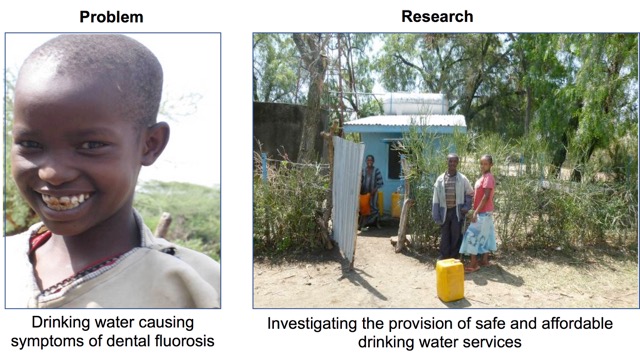
SwissFreshWater successfully deploys a pay-per-use service (selling water as a service), instead of selling the water treatment equipment. Such a pay-per-use service is embedded into a franchise model, which has attracted 120 entrepreneurs who want to operate a franchise water shop. They sell safe drinking water to more than 100’000 people, who previously had to drink brackish water from wells and boreholes containing fluoride, arsenic, heavy metals such as mercury and, of course, salt. Such water causes, in addition, hypertension, fluorosis, cancer, etc.

Third, it means interdisciplinary work. For example, we can only investigate safe water provision, if we involve engineers to verify that the water treatment system is actually functioning and natural scientists to reliably measure water contamination before and after the treatment. Such interdisciplinary research means to reach out to these other disciplines. To do so, we attend conferences outside our service community. We hold presentations at Stockholm World Water Week, the Water and Health Conference at University of North Carolina, the Base of the Pyramid Summit in Singapore and the African Academy of Management Conference. We can also leverage the expertise of academics at the Swiss Federal Institute of Aquatic Science and technology, where we are housed. Over the last few years, we published in engineering and natural science journals as well as journals that have a focus on the developing countries. This pushes us out of our comfort zone, because we have to adapt the way we publish so that our research can reach a variety of audiences. In our presentations outside of the service research community, we answer questions from the World Health Organization (WHO) and the World Bank about what service research can really contribute to their challenges. Seeing that the WHO states that a better understanding of services to alleviate poverty is needed, we think that we are on the right track.

Fourth, such audiences do not only include various academic disciplines. It also means to write for practitioners and policy makers. For example, together with the German Development Bank, we wrote a policy letter for the Ministry for Development about how to approach sanitation challenges from a service system perspective.

Fifth, it means working with local service researchers. Consider our major service conferences (e.g., SERVSIG, QUIS or Frontiers), there are still not many participants from Asia, Africa, or Latin America. For a long period of time, Javier Reynoso from Monterrey in Mexico was more or less the only representative. Jay Kandapully’s IRSSM conference for developing service researchers in lower income countries by building bridges between developed, newly industrializing, and low-income countries will have its 8th meeting in 2017. This is an interesting starting point to get better connected with local researchers. We have built our network of research partners and we are happy for their support.

Sixth, a lot of our work relies on involving institutions that are beyond the typical scope of service research. We collaborate with the World Bank, German Development Bank, German Developing Collaboration, Bill & Melinda Gates Foundation, and Swiss Church Aid. Such collaborations are highly challenging, because we always have to manage the trade-off between practically relevant and academically rigorous research.

To tackle these issues, our entire team does a great job and tried to enhance service research. If you are interested in learning more about our research, do not hesitate to contact us: heiko.gebauer@eawag.ch

I would like to thank my entire team for all their work: Caroline, Mirella, Simon and Gregoire.


Heiko Gebauer
eawag, Swiss Federal Institute of Aquatic Research
CTF – Service Research Center, Karlstad University, Sweden
Linkoping University, Sweden

References 

Gebauer, H., Haldimann, M. & Saul, C.J. (2017). Business model innovations for overcoming barriers in the base-of-the-pyramid market. Industry and Innovation,

http://dx.doi.org/10.1080/13662716.2017.1310033

Gebauer, H., Saul. C.J., Haldimann, M. & Gustafsson, A. (2017). Organizational capabilities for pay-per-use services in product-oriented companies. International Journal of Production Economics, http://doi.org/10.1016/j.ijpe.2016.12.007

Witell, L., Gebauer, H., Jaakkola, E., Hammedi, W., Patricio, L. & Perks, H. (2017). A bricolage perspective on service innovation. Journal of Business Research, http://dx.doi.org/10.1016/j.jbusres.2017.03.021

Gebauer, H. & Saul, C. (2014). Business model innovation in the water sector in developing countries, Science of the Total Environment, 488(1), 512-520.

http://www.sciencedirect.com/science/article/pii/S0048969714002204

Gebauer, H. & Reynoso, J. (2013). An agenda for service research at the base of the pyramid. Journal of Service Management, 24(1), 482-502.

http://www.emeraldinsight.com/doi/full/10.1108/JOSM-04-2013-0090

INFORMS Service Science is expanding and reorganizing its editorial structure. The editorial board will be structured around four areas and four area editors, aligned with major themes of the journal and aimed at broadening connections with existing research communities. The areas are customer-centered service, service operations management, service research and practice, and healthcare applications. The journal’s Editor-in-Chief, Paul Maglio, will serve as the area editor for service research and practice, and we previously announced Lisa Maillart as area editor for healthcare applications and Seyed Iravani as area editor for service operations management.

Now, we are delighted to announce the area editor for Customer-Centered Service is Sriram Dasu, Associate Professor in the department of Data Sciences and Operations at the Marshall School of Business, University of Southern California. Dr. Dasu received his PhD from the Sloan School of Management, MIT.  His research interests are in the area of service operations, healthcare, and supply chain management.  He is particularly interested in the interface between psychology and design of service operations.  Dr. Dasu has served as Associate Editor for ManagementScienceNaval Research Logistics, and MSOM, and he was also a Department Editor for MSOM

Today we identify service articles published in Marketing, Management, Operations, Productions, Information Systems & Practioner-oriented Journals in December 2016.

For more information about the alert system methodology go here


For service articles in the Journal of Business Research go here.

Heese, J., R. Krishnan and F. Moers (2016): Selective Regulator Decoupling And Organizations’ Strategic Responses, Academy of Management Journal, 59(6), pp. 2178-2204

Organizations often respond to institutional pressures by symbolically adopting policies and procedures but decoupling them from actual practice. Literature has examined why organizations decouple from regulatory pressures. In this study, we argue that decoupling occurs within regulatory agencies and results from a combination of conflicting institutional pressures, complex goals, and internal fragmentation. Further, regulatory decoupling is selective–that is, regulators fail to adequately enforce standards only for one set of organizations. Regulated organizations that benefit from selective regulatory decoupling use nonmarket strategies to maintain their favorable regulatory status, and, in the process, selectively decouple their norms in one organizational activity but not others. As an empirical context, we use the hospital industry in which regulators have to balance conflicting pressures to be tough on fraud while maintaining the community’s access to essential but unprofitable services, such as charity care and medical education. In response, hospital regulators selectively decouple and exhibit leniency in enforcement of mispricing practices toward “beneficent hospitals,” defined as hospitals that provide more charity care and medical education. In turn, beneficent hospitals selectively decouple their service and profit goals by providing unprofitable services to uninsured patients, while mispricing insured patients to earn higher reimbursements.

Link: http://dx.doi.org/ 10.5465/amj.2015.0446 [Google]


Barrett, M., E. Oborn and W. Orlikowski (2016): Creating Value in Online Communities: The Sociomaterial Configuring of Strategy, Platform, and Stakeholder Engagement, Information Systems Research, 27(4), pp. 704-723

How is value created in an online community (OC) over time? We explored this question through a longitudinal field study of an OC in the healthcare arena. We found that multiple kinds of value were produced and changed over time as different participants engaged with the OC and its evolving technology in various ways. To explain our findings, we theorize OC value as performed through the ongoing sociomaterial configuring of strategies, digital platforms, and stakeholder engagement. We develop a process perspective to explain these dynamics and identify multiple different kinds of value being created by an OC over time: financial, epistemic, ethical, service, reputational, and platform. Our research points to the importance of expanding the notion of OC users to encompass a broader understanding of stakeholders. It further suggests that creating OC value increasingly requires going beyond a dyadic relationship between the OC and the firm to encompassing a more complex relationship involving a wider ecosystem of stakeholders.

Link: http://dx.doi.org/ 10.1287/isre.2016.0648 [Google]


Schepers, J. J. L., E. J. Nijssen and G. A. H. van der Heijden (2016): Innovation in the frontline: Exploring the relationship between role conflict, ideas for improvement, and employee service performance, International Journal of Research in Marketing, 33(4), pp. 797-817

Although practitioners and scholars recognize that frontline employees’ (FLEs’) performance may improve rather than suffer from role conflict, research has yet to show how firms can manage this complex process. This study proposes that employees’ ideas for improvement are a crucial mediator in role conflict’s positive influence on FLEs’ service performance. A conditional process model was tested in two empirical studies with multisource data. Results show that role conflict positively influences service performance through the employee’s ideas for improvement. Role conflict also has a direct negative effect on performance. Detailed moderating analyses, using a floodlight approach, show that role conflict’s total effect on service performance is positive only when an employee’s learning orientation and the manager’s level of encouragement for improvement are aligned. In other cases role conflict does not affect, or can even seriously impair FLEs’ service performance. This study is the first to demonstrate empirically how, and under what conditions, role conflict can lead to performance enhancement of FLEs. Our findings help marketing managers to leverage role conflict for service innovation and to serve customers better.

Link: http://dx.doi.org/ 10.1016/j.ijresmar.2016.01.004 [Google]


Edelman, B. and Z. Lai (2016): Design of Search Engine Services: Channel Interdependence in Search Engine Results, Journal of Marketing Research, 53(6), pp. 881-900

The authors examine prominent placement of search engines’ own services and effects on users’ choices. Evaluating a natural experiment in which different results were shown to users who performed similar searches, they find that Google’s prominent placement of its Flight Search service increased the clicks on paid advertising listings by more than half while decreasing the clicks on organic search listings by about the same quantity. This effect appears to result from interactions between the design of search results and users’ decisions about where and how to focus their attention: users who decide what to click on the basis of relevance were more likely to select paid listings, whereas users who are influenced by visual presentation and page position were more likely to click on Google’s own Flight Search listing. The authors consider implications of these findings for competition policy and for online marketing strategies

Link: http://dx.doi.org/ [Google]


Blut, M. (2016): E-Service Quality: Development of a Hierarchical Model, Journal of Retailing, 92(4), pp. 500-517

Using survey data from 358 online customers, the study finds that the e-service quality construct conforms to the structure of a third-order factor model that links online service quality perceptions to distinct and actionable dimensions, including (1) website design, (2) fulfillment, (3) customer service, and (4) security/privacy. Each dimension is found to consist of several attributes that define the basis of e-service quality perceptions. A comprehensive specification of the construct, which includes attributes not covered in existing scales, is developed. The study contrasts a formative model consisting of four dimensions and sixteen attributes against a reflective conceptualization. The results of this comparison indicate that studies using an incorrectly specified model overestimate the importance of certain e-service quality attributes. Global fit criteria are also found to support the detection of measurement misspecification. Meta-analytic data from 31,264 online customers are used to show that the developed measurement predicts customer behavior better than widely used scales, such as WebQual and E-S-Qual. The results show that the new measurement enables managers to assess e-service quality more accurately and predict customer behavior more reliably.

Link: http://dx.doi.org/ 10.1016/j.jretai.2016.09.002 [Google]


Obeng, E., R. Luchs, J. J. Inman and J. Hulland (2016): Survival of The Fittest: How Competitive Service Overlap and Retail Format Impact Incumbents’ Vulnerability to New Entrants, Journal of Retailing, 92(4), pp. 383-396

Many retailers invest in ancillary services to provide shoppers with additional reasons to come to their stores. However, it is unclear whether these services insulate incumbents from new entrants. We address this question by examining how the size and uniqueness of an incumbent’s service portfolio protects its sales after a new competitor enters. We study uniqueness by introducing the notion of “competitive service overlap” (CSO) that operationalizes service similarity, and show both that retailers are best served by offering many services and that particularly successful retailers have more unique service portfolios. Furthermore, the impact of uniqueness is most prominent when a grocery incumbent faces a discounter entrant (e.g., Kroger facing a Wal-Mart entry).

Link: http://dx.doi.org/ 10.1016/j.jretai.2016.07.001 [Google]


Cui, S. and S. Veeraraghavan (2016): Blind Queues: The Impact of Consumer Beliefs on Revenues and Congestion, Management Science, 62(12), pp. 3656-3672

In many service settings, customers have to join the queue without being fully aware of the parameters of the service provider (e.g., customers at checkout counters may not know the true service rate before joining). In such ‘blind queues,’ customers make their joining/balking decisions based on limited information about the service provider’s operational parameters (from past service experiences, reviews, etc.) and queue lengths. We analyze a firm serving customers making decisions under arbitrary beliefs about the service parameters in an observable queue for a service with a known price. By proposing an ordering for the balking threshold distributions in the customer population, we are able to compare the effects of customer beliefs on the queue. We show that, although revealing the service information to customers improves revenues under certain conditions, it may destroy consumer welfare or social welfare. Given a market size, consumer welfare can be significantly reduced when a fast server announces its true service parameter. When revenue is higher under some beliefs, one would expect the congestion to also be higher because more customers join, but we show that congestion may not necessarily increase. This paper was accepted by Teck-Hua Ho, stochastic models and simulation

Link: http://dx.doi.org/ 10.1287/mnsc.2015.2320 [Google]


Xu, Y., C. Shi and I. Duenyas (2016): Priority Rules for Multi-Task Due-Date Scheduling under Varying Processing Costs, Production & Operations Management, 25(12), pp. 2086-2102

We study the scheduling of multiple tasks under varying processing costs and derive a priority rule for optimal scheduling policies. Each task has a due date, and a non-completion penalty cost is incurred if the task is not completely processed before its due date. We assume that the task arrival process is stochastic and the processing rate is capacitated. Our work is motivated by both traditional and emerging application domains, such as construction industry and freelance consulting industry. We establish the optimality of Shorter Slack time and Longer remaining Processing time (SSLP) principle that determines the priority among active tasks. Based on the derived structural properties, we also propose an effective cost-balancing heuristic policy and demonstrate the efficacy of the proposed policy through extensive numerical experiments. We believe our results provide operators/managers valuable insights on how to devise effective service scheduling policies under varying costs.

Link: http://dx.doi.org/ 10.1111/poms.12606 [Google]


Bigné, E., E.-M. Caplliure and M.-J. Miquel (2016): eWOM on Travel Agency Selection: Specialized versus Private Label, Psychology & Marketing, 33(12), pp. 1046-1053

In the travel industry, electronic word of mouth (eWOM) elicits a major influence on consumers’ decision making. Travel retailers are facing the new challenges derived from the different nature of their competitors-big hypermarkets, for instance, are extending their brands to travel services-and the challenges derived from online comments that consumers have access to. With a sample of 263 tourists, and using a fuzzy-set qualitative comparative analysis data analysis, this paper shows how the selection between a specialized travel agency and a private label (PL) agency is influenced by five factors: the usefulness attached to online reviews by users and the valence of those online reviews, attitude and experience with PL, and the individual’s value consciousness. The contribution of this paper not only comes from the novelty of considering PL in the context of travel agencies, but also from using a relatively novel data analysis approach useful for analyzing management issues

Link: http://dx.doi.org/ 10.1002/mar.20938 [Google]


Buzova, D., S. Sanz-Blas and A. Cervera-Taulet (2016): Cross-cultural Perceptions of Onshore Guided Tours: A Qualitative Approach Based on eWOM, Psychology & Marketing, 33(12), pp. 1054-1061

Recognizing the importance of the study of guided tour experiences and being aware of the cross-cultural variations of services’ perceptions, the purpose of this article is to examine if cruise tourists from the two main generating markets (Europe and North America) perceive differently a port of call guided tour based on the content of the eWOM generated. The data set was comprised of 334 reviews on guided tours undertaken in Spanish ports of call and published during the period 2009-2015 on the major travel Web site Tripadvisor. The thematic content analysis of the data was performed using the text mining software Leximancer. The results yielded different pictures for the experiences described by both cultures, with Europeans valuing the tour in terms of efficiency and North Americans praising guide’s performance and tailor-made tour services. Based on these findings, practical implications are discussed

Link: http://dx.doi.org/ 10.1002/mar.20939 [Google]


Sánchez-Franco, M. J., A. Navarro-García and F. J. Rondán-Cataluña (2016): Online Customer Service Reviews in Urban Hotels: A Data Mining Approach, Psychology & Marketing, 33(12), pp. 1174-1186

This study proposes a product feature-oriented approach to the analysis of online guests’ reviews, and it analyzes the relationship between the most salient features and guests’ hotel rating in the online travel agencies environment. In particular, this research means to address the following research question: How can this understanding of these features help us to design desirable urban hotel experiences that guests really assess? This research employs a sample of 829 Spanish urban hotels and 19,318 reviews. These data, by extracting attributes that are mentioned differently by males or females, reveal the moderating role of gender on the influence of the main dimensions of hospitality services on hotel ratings.

Link: http://dx.doi.org/ 10.1002/mar.20955 [Google]


dna-bart-ohne-logo

Guest article by Bart Larivière, Recipient of the 2016 SERVSIG Emerging Service Scholar Award

Somewhere over the North Atlantic Ocean, flying from New York to Brussels – unlike other passengers – I cannot fall asleep. Not because of my neighbor is snoring continuously. No, the adrenalin and excitement of the past few days are keeping me awake. I was fortunate to be part of the 5th (and celebration!!) edition of the Let’s Talk About Service (LTAS) workshop being held at Fordham University. I met young service scholars with brilliant research ideas and listened to the wise feedback from established scholars who were passionate about mentoring these young scholars. Such events always remind me how wonderful and supportive our SERVSIG community is.

Being a great “service scholar” implies much more than doing research on one of the miscellaneous topics that are listed on the websites of various service journals or called for papers and special issues. Equally important is to help to shape our field in various other ways. In the next paragraphs, I reflect on three avenues worth considering – all relating to “serving” our service community in different ways. I encourage you to use your service DNA to engage in them.

Service Avenue 1:
Make a Difference by Better “Marketing” our Service Discipline!

Service research is often too narrowly perceived and understood as being a subdomain of the marketing discipline (e.g., the marketing of services as opposed to the marketing of goods). As a result, service “marketing” is considered as another subfield in addition to consumer behavior (CB) and modeling.

This false perception by outsiders is partially caused by the fact that (i) many of our leading scholars are faculty members at a marketing department, and (ii) SERVSIG – our service community – acts as a special interest group of the American “Marketing” Association.

Most research fields aim at multidisciplinary research, for instance by drawing on literatures from various fields beyond their own discipline. Nevertheless, service research is different and more interdisciplinary in nature. For instance, the mission and goal of the Center for Service Intelligence (CSI) at Ghent University is defined as follows:

“Our ambition is to intertwine academic rigor and managerial relevance by envisioning excellence in Research (Think), Education (Learn), and Seminars & Conferences (Network). An integrated approach on the customer (Marketing), the personnel (Human Resources) and processes (Operations and IT) is warranted to foster service innovations and meet today’s challenges in diverse industries: private, public and social profit. The best experience for different stakeholders is the one that achieves the greatest mutual value for all parties involved: delivering what customers want/need in an effective and cost-efficient way.”

This interdisciplinary vision of CSI is visualized in Figure 1:

picture1

Fig. 1: Service management from an interdisciplinary perspective @ CSI Ghent

And these are not just words or figures, the facts prove that scholars from 7 different departments at Ghent University are united and join forces under the umbrella of CSI:

  1. Department of Entrepreneurship, Innovation and Service Management
  2. Department of Marketing
  3. Department of Business Informatics and Operations Management
  4. Department of Public Governance, Management and Finance
  5. Department of Human Resource Management and Organizational Behaviour
  6. Department of Public Health
  7. Department of Translation, Interpreting and Communication

The first five departments are part of the Faculty of Economics, the sixth of the Faculty of Medicine and Health Sciences, and the last of the Faculty of Arts and Philosophy. As such, during our food for thought seminars and monthly (i.e., 3th Friday of each month) meetings – which we call “Happy Fridays” – we meet with a diverse group of scholars having different backgrounds and talking about and sharing the same passion: service research!

Paradoxically, in my opinion, marketing is rather a subfield of “service management/research” than the commonly held belief that “service marketing/research” is a subdomain – and hence, fraction – of the marketing discipline. You can’t value what you can’t define. You can’t appreciate what is unknown.

I encourage service scholars to become true apostles of our field in their respective regions, by better promoting and making clear what “service research” stands for. As a result, we won’t only get the recognition that we deserve, we will also be able to welcome more scholars from other fields to join forces with us in order to address (business) problems more holistically. 

Service Avenue 2:
Make a Difference by Addressing Problems that Matter

It’s not the strongest of the species that survive, nor the most intelligent, but the one most responsive to change (quoting Charles Darwin, Evolution Theory). Despite this conventional wisdom, one of the most consistent patterns in business is the failure of leading companies to stay at the top of their industries when technologies or markets change (Bower & Christensen, 1995; Christensen, Raynor, & McDonald, 2015).

As noted by Kay Lemon during the LTAS workshop (December, 9, 2016): “Our service field is important because our research starts from addressing real business problems”.

I fully agree, it is important to acknowledge real business problems as well as societal effects and trends. Just to name a few: our field is pioneer in addressing the impact of technological changes on customer – firm relationships, in understanding what is making customers loyal, in linking employee performance to firm profits through customer experience, in studying co-creation with customers and building networks or ecosystems to better serve the customer and finding service innovations, in adopting a multi-stakeholder perspective on well-being (e.g., transformative service research) in various industries, and countries (also having attention for the base of the pyramid), etc.

I encourage service scholars to address real (business) problems and to consider the managerial and societal impact of their research efforts.

We are in the best position to address these challenges, especially if we create an interdisciplinary team. To quote the wise words of Roland Rust “What should companies do differently? How will your insights change their behavior?” It is essential to keep this relevance check in mind throughout the entire research journey: from problem definition to finding a team to data collection to analysis to the dissemination of new knowledge.

Service Avenue 3:
Make a Difference by “Paying Forward” in Your Own Way – That’s the “Circle of Academic Life”

Similar to the Circle of Life, I am convinced that we need to envision the “Circle of Academic Life”. There exists an opportunity to see the bigger picture. Much like a PhD trajectory is more than a bunch of bundled papers, so is your entire academic career. You cannot make a “true” difference by solely focusing on yourself and your own track record (e.g., how many papers you have published). For sure, these are important, but don’t necessarily set you apart and make you happy.

When I wrote about my role models for a former SERVIG newsletter, I acknowledged that “we should be very grateful to the pioneers of our service community: the ones who wrote textbooks on service marketing and management that changed our conventional way of thinking, the ones who founded and organized our service conferences, and the founding and subsequent editors of all our service journals. It’s their ‘service’ enthusiasm that laid the foundation for our service research community.”

I still remember a conversation that I had with Lerzan Aksoy and Tim Keiningham years ago when I asked them how I could ever pay them back for what they had done for me. Their answer was pretty straightforward: “you don’t need to pay us back, you have to pay forward, that’s how the system works”.

The “Circle of Academic Life” is a mindset, a way of working. It is about doing something back for the community, not just because reciprocity is a proper thing to do, but rather since paying back is rewarding. “The best way to pursue happiness is to help other people, because there’s nothing else that will make you happier” (Quote by George Lucas).

I encourage service scholars to find their own spot in the “Circle of Academic Life.” People are a company’s greatest assets. The same applies to our SERVSIG community. Equally important is to realize that people are known for their heterogeneous skills. We don’t need everyone to set up journals, become an editor, or organize events… it is important to find your own strength in helping the community moving forward, which can be as simple as doing a friendly review, sharing great examples and cases for teaching purposes, welcoming and encouraging people to contribute to our field, mentoring young scholars, sharing great ideas on our SERVSIG Facebook and Twitter account, etc. It doesn’t matter what you do; the act of “serving” in your own way is more important.

In sum: Let us use our service DNA to advance our field. Every single detail matters and can make a huge impact… Let’s envision a great community and a great future together!

bartBart Larivière

Recipient of the 2016 SERVSIG Emerging Scholar Award

Associate Professor of Service Management – Ghent University

Founder and Executive Director of the Center for Service Intelligence – Ghent University (www.CenterforServiceIntelligence.org)

Co-Founder of the Let’s Talk About Service (LTAS) workshop (www.LetsTalkAboutService.org)

Founder of the Belgian Service Research Days

Co-chair of the Service Marketing Special Interest Group (SERVSIG) of the American Marketing Association (AMA) (www.SERVSIG.org)

Associate Editor of the Journal of Service Theory and Practice

r1_realrevolution2

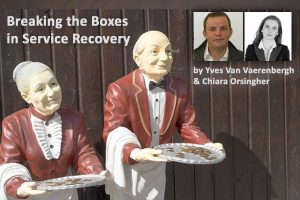
Guest article by Yves Van Vaerenbergh & Chiara Orsingher

Service recovery is studied extensively in service research. Service journals publish regularly papers on service recovery (a quick search on Google Scholar returns 1.800 papers containing service recovery in their title), and many studies are presented at service conferences. Combined, we have built up strong theoretical foundations on how to manage recovery. On the other hand, the situation in the field is not really positive. The 2013 U.S. Customer Rage Study by the CMCC shows that customer satisfaction with recovery is no higher than that reported by the 1973 White House Study, and U.S. businesses are losing billions of dollars because of poor service recovery. Roland Rust and Ming-Hui Huang’s recent service failure and recovery experience with United Airlines shows that even today, many organizations still struggle with getting their service recovery right (

Roland Rust and Ming-Hui Huang’s recent service failure and recovery experience with United Airlines shows that even today, many organizations still struggle with getting their service recovery right (http://www.servsig.org/wordpress/2016/08/service-failure-handling-at-united/).

In our most recent paper “Service Recovery: An Integrative Framework and Research Agenda“, we zoomed in on this paradox: Despite the fact that we have been studying service recovery issues for over 40 years, too many organizations still fail at providing good customer service. We synthesized this literature, and made some striking observations.

First, despite the simple observation that service researchers have interdisciplinary roots, and despite the numerous calls for interdisciplinary research on service issues, most of the research on recovery is nicely contained by disciplinary boundaries. We found very few studies approaching recovery from truly interdisciplinary perspectives. However, “real-world problems do not come in disciplinary-shaped boxes” (Jeffrey 2003, p. 539), and service recovery is no exception. Second, we found that most of the research takes a single-level of analysis approach to understanding service recovery issues: Researchers typically focus on how customers evaluate the organization’s recovery efforts, what factors drive the frontline employee’s recovery performance, or how organizations can develop service recovery systems. Most of the research has taken a single-level approach, by either focusing on individuals (customers or employees) or organizations; multi-level studies on recovery are extremely rare. Yet again, as a community we can have a stronger impact on organizational policies when conceptualizing phenomena at multiple levels simultaneously, including top-down (from organization to individual) and bottom-up (from individual to organization) processes (Kozlowski & Klein, 2000).

Based on our synthesis, we believe the time has come to think differently about service recovery. If we really want to improve service recovery in the field, we need to move away from approaching service recovery from a single discipline and at a single level at a time, and need to start considering service recovery as an integrated technical and social system that requires input from multiple disciplines at multiple levels simultaneously. Don’t get us wrong: we are not saying that single-discipline, single-level studies are not useful (we also have to plead guilty on that one, too J). Yet at the same time, we need to realize that these approaches fit within a broader framework.

In our paper, we offered an integrative framework as well as a future research agenda that might provide inspiration to both young and more established scholars interested in studying service recovery issues. Some of the most pressing research questions are:

  • What drives organizations (not) to invest in recovery systems?
  • What is the role of leadership in implementing service recovery systems across the organizations?
  • How can we incorporate proactivity into these systems at different levels of the organization (e.g. individual and group level)?
  • How do these systems influence frontline employees? Are strong recovery systems always beneficial?
  • What matters most for stimulating frontline employee recovery performance – hiring the ‘right’ employee or training and rewarding them?
  • Is justice the only framework through which we should conceptualize recovery?
  • If we start studying actual customer behavior, do we come up with the same priority list of recovery options?
  • How can employees and customers contribute to complaint-based process improvements throughout the organization?
  • How can firms turn customer complaints into actual process improvements effectively?

These are some of the issues that are up for further exploration. We hope that our summary sparks new or renewed interest in the topic of service recovery, especially since too many customers are still left dissatisfied after complaining to organizations.

yvesYves Van Vaerenbergh
Assistant Professor of Marketing KU Leuven, Belgium


chiaraChiara Orsingher
Associate Professor Department of Management University of Bologna, Italy


Reference:

Van Vaerenbergh, Y. & Orsingher, C. (2016). Service recovery: An integrative framework and future research agenda. Academy of Management Perspectives, 30(3), 328-346. doi: 10.5465/amp.2014.0143

screen-shot-2016-11-22-at-9-49-15-am

Levent Altinay has been appointed Editor in Chief for The Service Industries Journal.

Levent Altinay is Professor of Strategy and Business Development and Research Area Leader for Oxford School of Hospitality Management. Levent’s research interests are in the areas of entrepreneurship, strategic alliances and international business. He is on the editorial boards of more than twelve journals including Journal of Services Marketing, The Service Industries Journal, Management Decision and International Journal of Contemporary Hospitality Management.

sijThe Service Industries Journal is an international journal of service management. It aims to improve our knowledge of the services sector, service firms and the effective management of these firms. This multidisciplinary journal was established in 1981 as the first academic peer-reviewed journal in the world devoted to the services sector and service management.

The journal publishes research that contributes to the development of theory in the areas of management, marketing, human resources, operations management, entrepreneurship, innovation, and financial management. We seek to attract papers from researchers whose studies are informed by social sciences such as sociology, psychology, economics, law, and politics.  Contributions are especially welcomed from around the globe addressing contemporary social, economic, political and environmental issues.

Further Appointments:

The Journal Strategy Editors:
Professor Dr. M. Joseph Sirgy, Virginia Polytechnic Institute & State University (Virginia Tech), USA
Professor Dr. Muzaffer Uysal, Isenberg School of Management, UMassAmherst, USA
Professor Gary Akehurst, Aberystwyth University, UK,

Regional Editors
America
Professor Dr Mark Rosenbaum, Northern Illinois University, USA
Professor Dr Ulrike Gretzel, University of Southern California, USA
Europe
Professor Dr Carlos Flavian, University of Zaragoza, Spain
Professor Dr Mark Saunders, University of Birmingham, UK
Asia Pacific
Professor Dr Youjae Yi – Seoul National University, Republic of Korea
Professor Dr Cathy Hsu, Hong Kong Polytechnic University, Hong Kong, China
Australia
Professor Dr Noel Scott – Griffith University, Australia

Methodology Editors
Dr Melih Madanoglu, Florida Atlantic University, Department of Marketing, USA
Dr Hossein GT Olya, Sejong University, Republic of Korea

Open appointments:

  • Chinese Language Editor to offer support and assistance with the translation of the abstracts of accepted papers to Mandarin/Chinese Language.


untitled1
Service Dominant Logic, Network & Systems Theory And Service Science:
Integrating Three Perspectives For A New Service Agenda

Sorrento Naples Italy 6 – 9 June 2017

Hosted By The University of Naples “Federico II” and the University of Salerno

Abstract submission: January 9th, 2016

CHAIRPERSONS

Evert GUMMESSON, Stockholm University, Sweden Cristina MELE, University of Naples “Federico II”, Italy Francesco POLESE, University of Salerno, Italy

Keynote Speakers

Robert LUSCH, University of Arizona, USA
Stephen VARGO, University of Hawaii, USA.
 Jim SPOHRER, IBM Almaden Research Center, San Jose, USA.

Scientific Committee

The Scientific Committee members will act as advisors to the Chairs and support the scientific level of the Forum. Important tasks for the members are the participation in the review process of submitted abstracts. The Scientific Committee members will serve as discussants during sessions.

President: Sergio Barile, University of Rome “La Sapienza”, ItalyClaudio Baccarani, University of Verona, Italy
David Ballantyne, University of Otago, New Zealand
Ralph Badinelli, University of Virginia Tech, USA
Rod Brodie, University of Auckland, New Zealand
Maria Colurcio, Università Magna Graecia di Catanzaro, Italy Bo Edvardsson, Karlstad University, Sweden
Gaetano Golinelli, University of Rome “La Sapienza”, Italy Anu Helkkula, Hanken University, Finland
Michael Kleinaltenkamp, University of Berlin, Germany Helge Lobler, University of Leipzig, Germany
Robert Lusch, University of Arizona, USA
Paul Maglio, University of California, USA
Suvi Nenonen, University of Auckland, New Zealand
Irene Ng, University of Warwick, UK
Jaqueline Pels, University of Torquato de Tella, Argentina Enzo Rullani, Venice International University, Italy
Tiziana Russo Spena, University of Naples “Federico II”, Italy Roberta Sebastiani, Catholic University of Sacred Heart, Italy Paolo Stampacchia, University of Naples “Federico II”, Italy Jim Spohrer, IBM Almaden Research Center, San Jose, USA Kaj Storbacka, University of Auckland, New Zealand
Marja Toivonen, VTT Technical Research Centre, Finland Marta Ugolini, University of Verona, Italy
Stephen Vargo, University of Hawaii, USA

The 3 Pillars of the Naples Forum

The Naples Forum on Service has reached its fifth edition and, after the success of its past experiences (see www.naplesforumonservice.it) is about to start its organization with inspiring scientific premises and great expectations for it to be the best edition ever organized. For the 2017 Forum, we continue moving our locations clockwise around the gulf of Naples and arrive in Sorrento (after Capri, Ischia and Naples), in an elegant and fascinating venue.

The Naples Forum is an effort to stimulate Paradigm 3 research, communicate it and speed up its progress (for a brief article on the paradigms, see Gummesson, 2012).
• Paradigm 1 (pre-1970s) where service was not on the agenda in marketing and management research and education:

  • Paradigm 2 (1970s-2000s) when service research grew exponentially with seminal contributions from Northern Europe, France, UK, USA and other countries with goods/services differences in the center but lacking syntheses and unifying theory.
  • Paradigm 3 (2000s-) when service research moved its focus from differences to commonalities and interdependencies between goods and services. It also moved from the supplier value chain to the value network of all stakeholders (“balanced centricity”) and service (in the singular) became the output irrespective of input. The roles of suppliers and customers have also changed through the recognition of co-creation of value with resource integration with customer-to-customer interaction (C2C) or more broadly as actor-to-actor interaction (A2A). In the core of Paradigm 3 is the recognition of complexity. Service systems are enormously complex – it is not sufficient to study the relationship between just a few variables. The new millennium brought with it openings to address complexity and take a more systemic view. Service-Dominant (S-D) Logic contributed a initial higher-level service theory of the best contributions of the past and showed directions for the future. Service Science started from practitioner experiences and challenges our way of designing and implementing service systems. Network Theory and Systems Theory have been deployed to address complexity, with applications like Many-to-Many-Marketing and the Viable Systems Approach (VSA). These developments form the 3 Pillars of the Naples Forum. With them it is motivated to label our current economy a Service Economy.

The transition to Paradigm 3 is developing – but it takes time and effort. Service research got under way 40 years ago and it is only now that we are beginning to sense the full picture of our economies as complex networks of service systems with a mission to enhance value for consumers, citizens, businesses and society as a whole.

The following sections offer brief reviews of the characteristics of the 3 Pillars.

Service Dominant (S-D) Logic

S-D logic summarizes its message in four axioms and ten foundational premises. In brief, these premises put the following to the fore. The most critical changes include moving from goods/services differences to goods/service interdependencies. The word ‘service’ is given a new meaning, going from an undefined input to the value of the output and value-in-use or in a more generalized way to value-in-context. Service is the fundamental basis of exchange (axiom 1) and goods are merely distribution mechanisms of service. Both businesses and customers are operant

(active) resources as opposed to the mainstream marketing and economics idea that suppliers do things to customers who are just reactive or passive (operand resources). A service provider can only offer a value proposition to the market; the beneficiaries is always a co-creator of value (axiom 2), whereas value actualization rests with users in an idiosyncratic and contextual way (axiom 4). The network aspect is implicit through the statement that all social and economic actors are cocreators and resource integrators (axiom 3), implying that value creation takes place through interaction in complex networks and systems.

Bob Lusch and Steve Vargo who designed S-D logic keep developing it and treat it as an open code where everyone is welcome to make constructive contributions 

Service Science

Service Science is a call for academia, industry, and governments to become more systemic about service performance and innovation. The ultimate goal of Service Science is to apply scientific knowledge to the design and improvements of service systems for business and societal purposes. The concern is that we do not master seamless and reliable service systems at a time when systems are becoming increasingly complex and global, making us increasingly vulnerable to systems sluggishness and failure. Every service system is both a provider and client of service that is connected by value propositions in value-creating networks.

Service Science is a multidisciplinary, open-source program based on computer science, industrial engineering, organizational theory, business strategy and more, including the humanities. In terms of science, it investigates what service systems are and how they evolve, and the roles of people, knowledge, shared information and technology, as well as the relevance of customers inside production processes; in terms of management it investigates how to improve and evaluate quality and productivity; and in terms of engineering it develops new designs of service systems with better technologies and software. Service Science studies complex service systems; such a simple and straight forward position calls for intriguing issues due to the ample set of disciplines, research methods, cultural domains and areas of interest in order to capture the powerful insights and the essence of service in technological setting and in today life.

Network and Systems Theory

The words complexity, networks and systems pinpoint the same phenomena. Complexity is derived from the Latin verb complecti, meaning “to twine together” and the noun complexus means “network”. The word “system” is derived from the Greek systema, meaning “a whole composed of many parts”. So the meanings of the three words overlap and expose their interdependency. From these words different traditions have sprung up. Network theory and systems theory offer both a way of thinking in relationships and interaction and techniques to address complexity and context. These are part of complexity theory where many others, for example, chaos theory, fractal geometry and autopoiesis (self-organizing systems) belong. Complexity theory exists both in social sciences, natural sciences and technology but is not utilized efficiently by management disciplines.

Network theory has primarily offered a systemic approach for B2B but has equal potential for B2C/C2B (business-to-consumer/consumer-to-business). Many-to-Many Marketing is a general approach that describes, analyzes and utilizes the network properties of marketing and recognizes that both suppliers and customers operate in complex network contexts. The Viable Systems Approach (VSA) is a systems theory-based application for management. It postulates that every business is a system, nested in a relational context where it is looking for competitive profiles (viability) through interaction with other actors/stakeholders. Its theory proposes a new representation of the behavioral approach to business and relational interactions with its context. In practice it is a methodological proposal that enables a better understanding of business models, supporting decision making in complex context.

Networks and systems thinking are integral parts of both S-D logic and Service Science. 

Developing Paradigm 3 through Naples Forum Publications

Within the 3 Pillars lots of activities including extensive publishing takes place. Lusch and Vargo have been involved in over 50 articles and 20 book chapters, edited several Special Issues of journals, and spoken continually at conferences, universities and business firms around the world. A new book written by Bob and Steve, (Service-Dominant Logic was published by Cambridge University Press in 2014) is a condensed (220 pp.) overview of where S-D Logic stands today. Jim Spohrer and his colleagues, together with Forum participants publish continuously on Service Science, including three recent books. Network and systems theory is increasingly integrated with the two other pillars and is the lead theme for several authors, not least from Italian researchers, the Nordic School and the IMP Group.

The Naples Forum stimulates Paradigm 3 research, communicates it and speeds up its progress. The Forum supports the efforts of the participants to publish by co-authoring with other participants and adopt presented papers to articles in journals of their own choice and in special Forum issues. As a result of past editions of the forum more than 100 articles were published in 13 journal special issues of, among the others, Journal of Service Management, Managing Service Quality, Journal of Service Theory and Practice, Service Science, Journal of Business Market Management, Mercati e Competitività.

 In this context we stimulate senior and young researchers to submit their proposal based upon the above mentioned Paradigm 3 spirit. A paper can either focus on one of the Forum Pillars or integrate two or all three of them.

PROGRAM

 The Forum starts on Tuesday, June 6, 2017, with registration and a reception at 18:00. On Wednesday, June 7, the Forum opens at 8.30 and ends on Friday, June 9, at 16:00. For details and continuous updates, see www.naplesforumonservice.it.
VENUE

Grand Hotel Cocumella, Via Cocumella 7, Sorrento, Italy (http://www.cocumella.com/en/position/)

CALL FOR PAPERS

We invite papers dealing with themes within one or several of the 3 Forum Pillars: S-D logic, service science, and network/systems theory. We especially encourage submissions with an integrative perspective. The papers could be theoretical and/or empirical and be based on qualitative and/or quantitative research. In order to submit an abstract directions are given within the www.naplesforumonservice.it web page. Note that Abstracts must be structured and follow the format of Emerald journal abstracts. Topics could include (but are not restricted to) the following:

  • Business models to manage networks and service systems
  • Complexity theory and service research
  • Experience, value-in-use and value-in-context
  • Internet of Things, Internet of Everything and the hub of all things
  • Integration and management of resources and capabilities
  • Markets and marketing
  • Methodological challenges and issues in service research
  • Multi-disciplinary approaches in service research
  • Networks, interaction and relationships
  • Practice-theory in service research
  • Service design
  • Service processes and engineering
  • Service science projects in research and/or education
  • Service systems and system thinking
  • Social Innovation
  • The development of Service-Dominant Logic
  • The development of service science
  • The role of institutional logics in service research
  • The Viable Systems Approach (VSA)
  • Value co-creation and the changing role of suppliers and customers
  • Value propositions
  • Web 2.0 or Web 3.0, the semantic web

IMPORTANT: These and possible other subthemes must have a clear connection to one or several of the 3 Forum Pillars. Three journal, and specifically Journal of Service Theory and Practice, Journal of Service Management and Journal of Marketing Management, will publish best selected papers from the Forum.

A purpose of the Naples Forum is to get different generations of researchers together both at the organized sessions and informally during breaks and social events. In the final selection of papers, both senior researchers and newcomers will be given a chance to present. There will be plenary sessions as well as parallel sessions. In order to increase the number of active participants special poster sessions will be organized during the Forum.

DOCTORAL WORKSHOP

To stimulate academic scholarship, discussions of ideas and dialogue about service among students and researchers from different countries, we would like to invite doctoral students to attend this workshop. PhD students in early and middle stages of their PhD research project are particularly encouraged to present their research proposals, preliminary results and their reflections on issues related to theory, methods and analysis. In case the PhD dissertation is not a monograph and is made of a series of articles on a common theme, the candidate can present a part of the work and a two-page summary of the overall dissertation theme. Note: The idea of the workshop is to help PhD students develop their dissertations and you should therefore prepare questions to the professors present. The doctorial workshop will be held on Tuesday, June 7 2017 (morning and afternoon).

DEADLINES

Abstract submission: December 20, 2016
Notification of acceptance: January 20, 2017
Final paper submission (optional): April 30, 2017

PRACTICALITIES

Information (hotel, travel, etc) will be available soon on the website. The fees include participation in:

  • All Forum sessions
  • Forum material
  • Lunches, refreshment during breaks, dinner and social events (the fee does NOT include Gala Dinner).

screen-shot-2016-11-12-at-10-06-40-am

more information on http://www.naplesforumonservice.it/

picture1

Case study by Vaibhav Garg

This case study focuses on the aspect of service excellence & personal involvement of the hotel management to advocate the hotel service philosophy and how it impacts guest loyalty, guest satisfaction scores and drive business results. It addresses key issues on service excellence & customer centricity such as:

Customer Listening:

  • How do you listen to your customer to obtain actionable information?
  • How do you follow up with your customers on the quality of products, customer support, and transactions to receive immediate and actionable feedback?
  • How do you listen to and observe former customers, potential customers and customers of competitors to obtain actionable information.

Customer Satisfaction & Engagement:

  • How do you determine customer satisfaction & dissatisfaction (both) and engagement?
  • How do you capture actionable information for use in the organization?
  • How do you engage customers to serve their needs and build relationships?

Customer Relationships:

  • How do you market, build and manage relationships with customers to achieve customer retention, meeting and exceeding their expectations in each stage of customer life cycle.
  • How do you manage customer complaints and how does your customer management
    process ensure that complaints are resolved promptly and effectively?

Introduction:
picture1

One out of every five guests says that their decision of coming back to the same hotel is influenced by the opportunity to “experience and be engaged” A key question is what does a guest mean by “experience and be engaged”?

The concept of guest engagement lies in the rigor of operational excellence and the emotional engagement of associates who perform their tasks genuinely from their hearts and hence in word and indeed, in intent and through gestures, a great hospitality is always genuine, attentive, passionate, caring and warm where engaged associates deliver exceptional service experiences and creates memories to last forever for the guests.

Before we proceed on this case study of Eriyadu Island Resort & Spa, Maldives where I was the resort manager in the year 2014 – 15, lets recall all our guest experiences and think whether the experience was worth remembering (as a guest). Was it perfect in terms of functionally? For example, if a room is clean a guest will not be delighted because he expects it to be so. However, if the room attendant finds out that it is his birthday and sends a cake to the room, he will be delighted. Our objective during that time was to create many delightful experiences being delivered to the guests during every employee’s guest interaction. The service which a guest will remember for a long time for e.g. someone wishes you “Happy Birthday” or a special bed decoration during the turn down service even when the guest has never told anyone about it.

Most hotels & resorts are highly concerned about guest satisfaction. Therefore, there are brand standards which are a guide to the colleagues to satisfy the guests. However, satisfaction of needs does not necessarily lead to engagement. For example an absolutely clean villa and a laundry delivered on time can satisfy a guest but may not engage him. Absence of these standards can lead to guest dissatisfaction. However, the presence of these standards does not necessarily lead to guest engagement or guest delight.

It is true that guest engagement can happen only if all the processes are in place firstly. To achieve high levels of guest engagement and guest delight, the guest should be made to feel that the management and colleagues of the hotel genuinely care for his well-being.

This case study advocates that that hotel management should go beyond providing a satisfactory experience to guests. They should instead strive to engage them by developing a rational and emotional connection. As this is accomplished, an engaged guest will have a strong bond with the hotel/ brand, making it harder for competitors to attract them.

Driving Emotional Engagement at Eriyadu Case Study: (2014-2015)

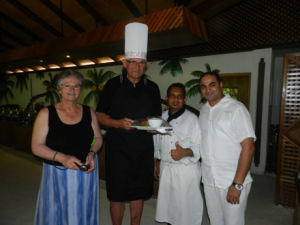
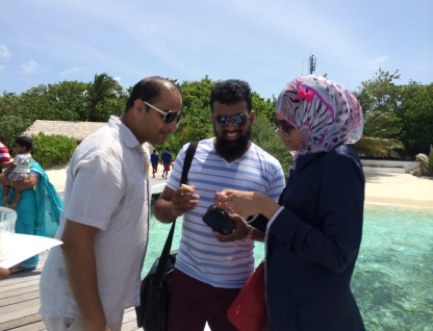
 man“When I took charge of this beautiful resort in the year 2014, my main focus was on enlivening the emotions and memories of the guests by genuinely caring and making them feel recognized, important and unique. Creating emotional engagement happens when we hear guests’ requests even before the guest knows them, going so above and beyond the call that folklore (“wow”moments) spreads throughout guests and impact repeat clientele positively.” says Vaibhav Garg (Former Manager – Eriyadu Island Resort & Spa, Maldives)

picture2picture3

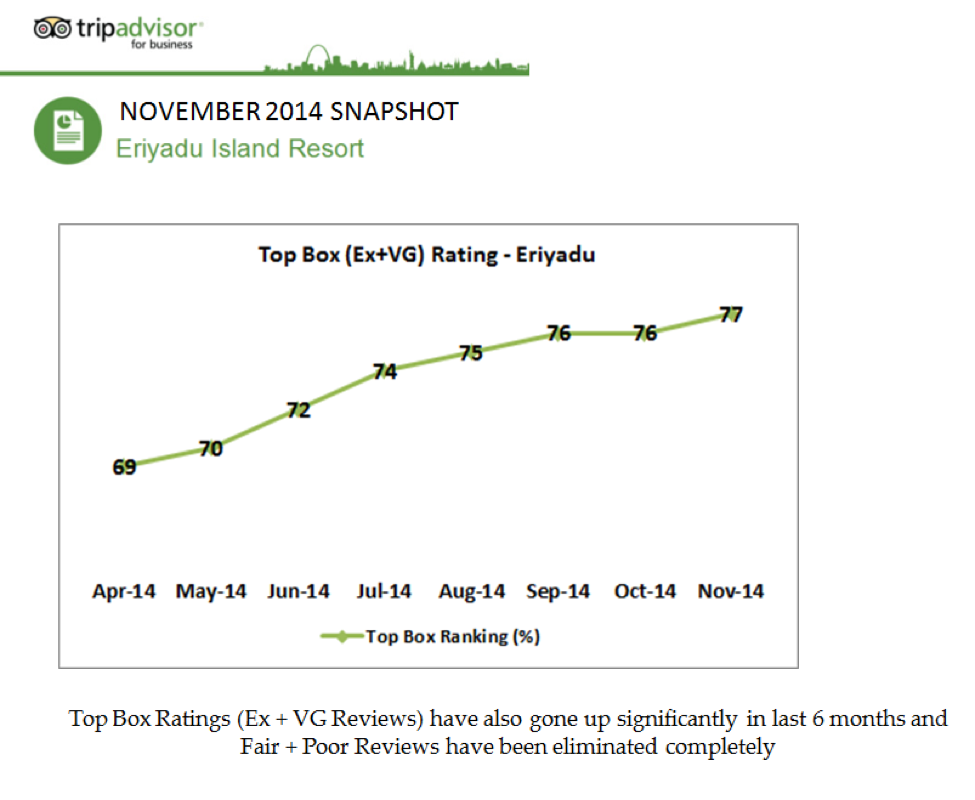
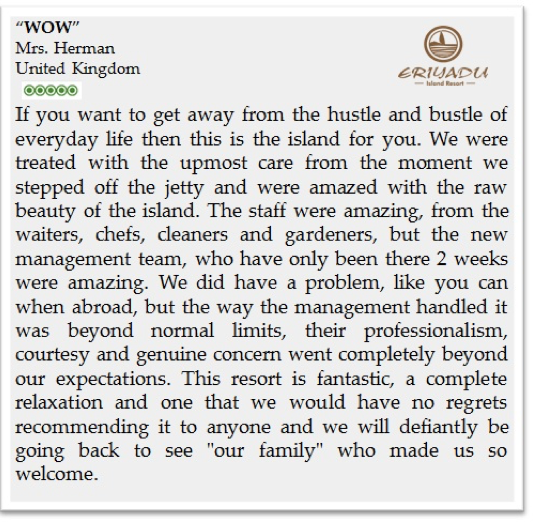
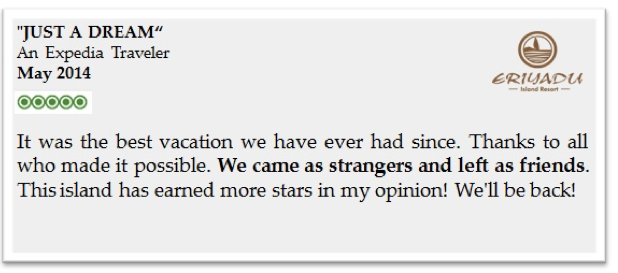
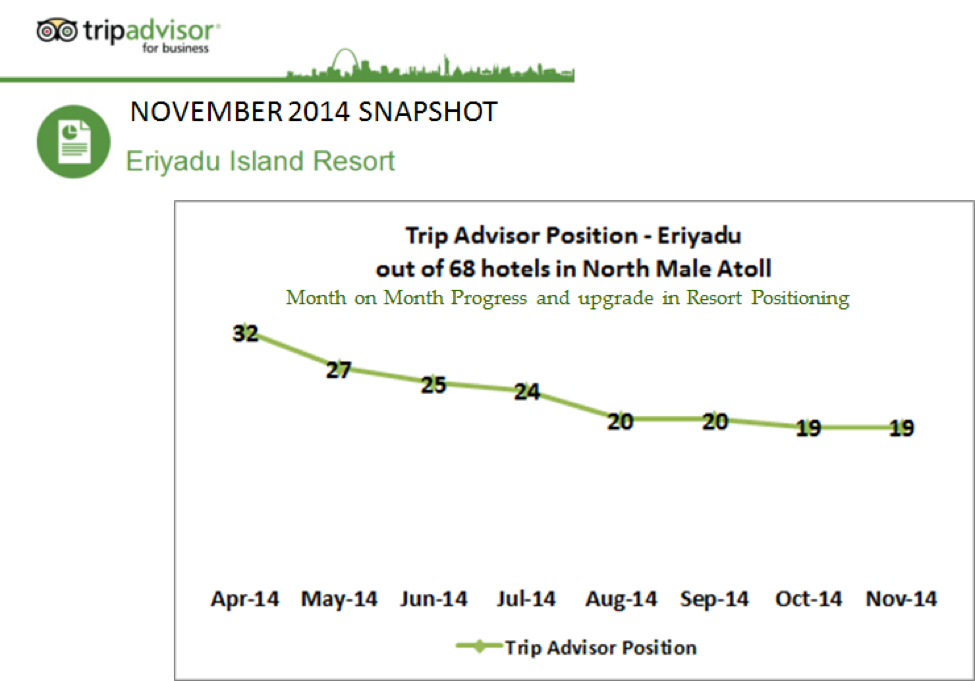
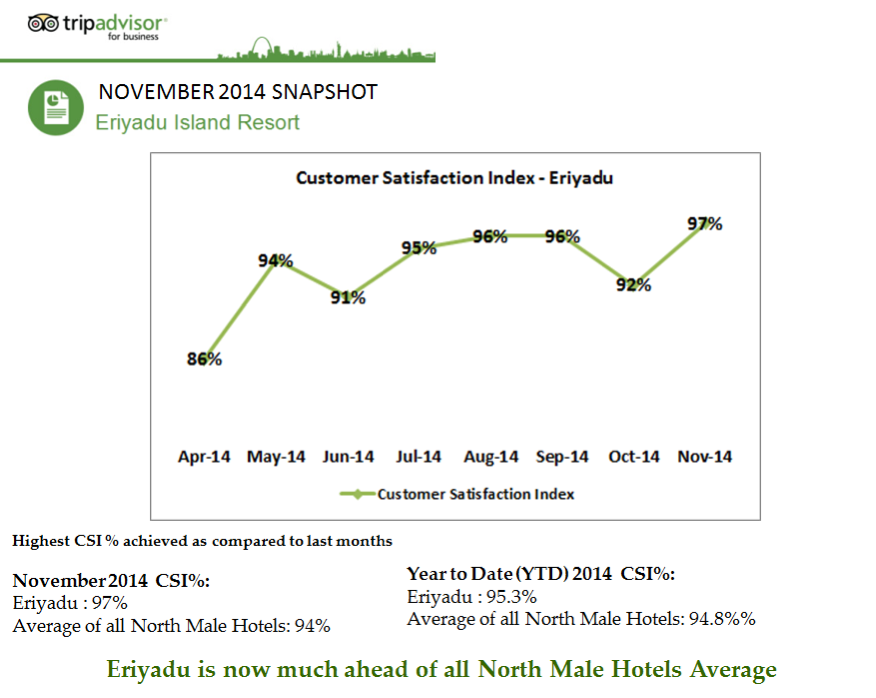
picture5Eriyadu Island Resort & Spa, Maldives – a budget-value standalone resort, during this project in the year 2014 required a turnaround operations and revive service philosophy, we realized that guests at this resort were outside of their comfort zone, looking for a place to call home as around 60% guests were repeat clients with a long stay of more than 2 weeks. To satisfy these desires, Eriyadu operations team gone back to the basics (with model reference) with guest service to engage in a way that makes guests feel like family, not customers. They launched special guest engagement program to build emotional connection to hone in on service, increase engagement and encourage feedback on trip advisor and other social media platforms to better enhance the guest experience and drive positive referral. It’s a unique effort that goes beyond traditional customer service to ultimately enrich the guests experience at every interaction. The results over the first 6 months (of implementation) of this project were encouraging as follows:
picture4

picture6

picture7

picture9

Emotional Engagement Initiatives introduced at Eriyadu Island Resort & Spa, Maldives Case Study:

  1. Head of Operations presence at each arrival and departures
  2. Seamless communication between teams and operations head in event of any glitch
  3. Head of operations and all HODs, meeting every guest personally in event of any glitch and offer solutions immediately
  4. Presence of F&B Manager at outlets during peak operations hour
  5. Pastry Chef & Coffee Shop Chef personally meeting and checking guest’s preferences and creating a delight
  6. Institutionalized “never say NO” approach with front teams – at each touch points
  7. All teams are informing the HODs in event of any urgent requests / glitches
  8. Close looping of service glitches and monitoring real time complaints
  9. Discussing guest feedbacks, service glitches, time taken to solve the complaints in the daily morning meeting with action taken
  10. Peak hour presence of Head of operations at lobby to meet, engage and be available for any assistance required by front teams or guests
  11.  Personal apology and follow up action is taken immediately by Head of Operations to re assure of our commitment in ensuring complete care and attention to guest’s concerns
  12. Empowering the front desk to take minor calls to ensure meeting prompt guest requests like room change, extension of check out time, use of spa lounge, boat movements etc
  13. Customized invitation cards for guests for various engagement activities
  14. Demonstrating front line staff to go beyond and delight guests
  15. Focus on remembering the guest’s name and capturing their preferences
  16. Revisited Guest Feedback Form – content and focus on capturing guest email IDs
  17. Hotel Management responses are now posted on Trip Advisor Reviews – Real Time

Driving Functional Engagement at Eriyadu Island Resort & Spa, Case Study:

“While we focused on the emotional engagement aspect, we also believed that the Functional components are also significantly crucial issues around the physical or hygienic requirements of our resort— defect free product, zero errors, timeliness of service, quality of furnishings, meeting basic expectations. These are so critical because if they are not met (and by the way, they only get noticed by the guest when they do not occur) the guest doesn’t evolve to the next level of the engagement”, added Vaibhav Garg

Functional Engagement introduced at Eriyadu Island Resort & Spa, Case Study:

The attempt was made to creating Unique Memorable Experiences at Eriyadu Island Resort & Spa, Maldives keeping in mind below themes for enhancing the guest experiences at each touch points through product and service offerings:

  1. Approach – Creating lasting first impressions
  2. Welcome – Check-in: Personalized, Welcoming and Efficient
  3. Engage – Lobby Living Spaces: The Heart of the Hotel
  4. Discover – The Resource Center: A Hub of Local Information
  5. Socialize – The Lounge / Bar: Sophisticated, Casual & Comfortable
  6. Dine – An Upscale Local Treat
  7. Well – Inviting guests to “Be Well”
  8. Gather – Event Spaces: Perfectly Planned
  9. Transition – Important Connections
  10. Each of the above themes ensured an opportunity for a guest to discover more and get a positive assurance from the physical aspects of the hotel.

Each of the above themes ensured an opportunity for a guest to discover more and get a positive assurance from the physical aspects of the hotel.

Key Learnings of the Project: Key Factors driving Guest Engagement and Role of Management:

There were number of key steps that were implemented and are suggested to improve guest engagement at a resort / hotel:

Creating an engaged team

picture10

To increase guest service and engagement, create a special engagement task-force team. This can include anyone who will play an integral role in the program. This includes hotel manager, sales & marketing, operations and of course, human resources. We highlight human resources because it is key to hire the right staff. If we’re aiming to make people feel like family, smile and be happy, we must hire and train people who can deliver this customer service.

Next step is to evaluate the strengths and weaknesses of your associates, front-line staff and anyone who will interact with guests. Determine with the task force team what the service goals should be, how the associates can better achieve them, and teach everyone how to deliver against the goals.

The magical moments by which a loyal, passionate customer is created are dependent upon the people in your organization. Furthermore, customers have told us through this research that their views of a hotel are impacted by how much fun the hotel staff is having and making throughout the experience. This ‘fun’ experience only occurs through engaged, dedicated employees. If you aren’t already doing so, you should understand the levels of Employee Engagement in your population and what drives employees to go above and beyond for your customers.

If you want your employees to be engaged, you must first be engaged with them. The old phrase ‘information is power’ is key to success. Give your employees the training and knowledge they require to confidently perform their role and engage with guests.

Lead by Example: Role of a Hotel Manager

picture12It’s important for the engagement task-force team to develop a way to reinforce the guidance. Consider appointing a Hotel Manager who can inspire and motivate the staff. This champion should also be well versed in the brand and product.
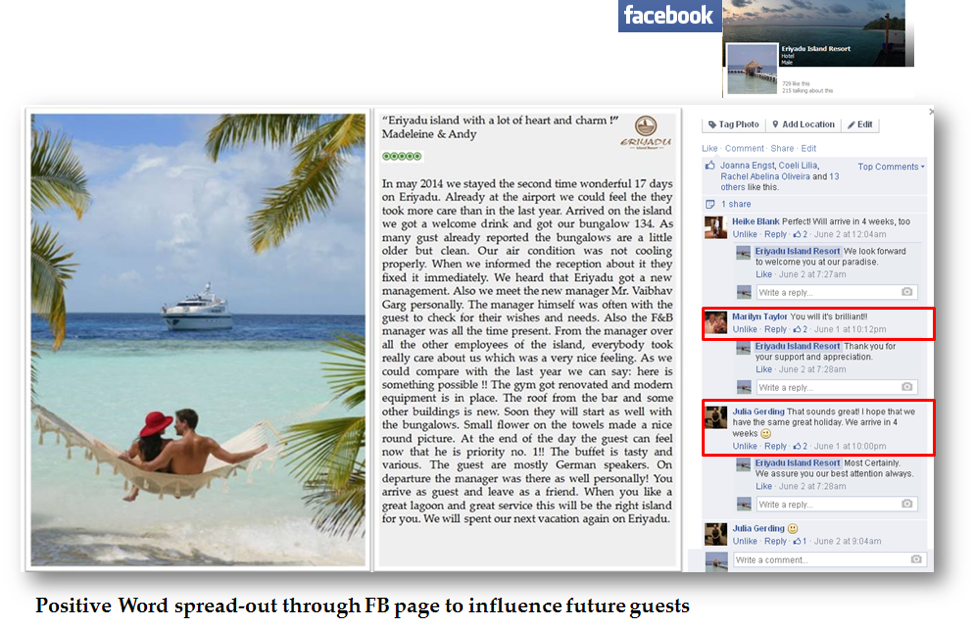
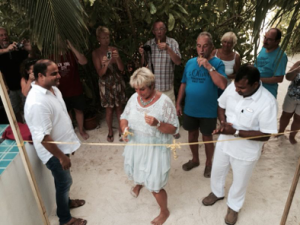
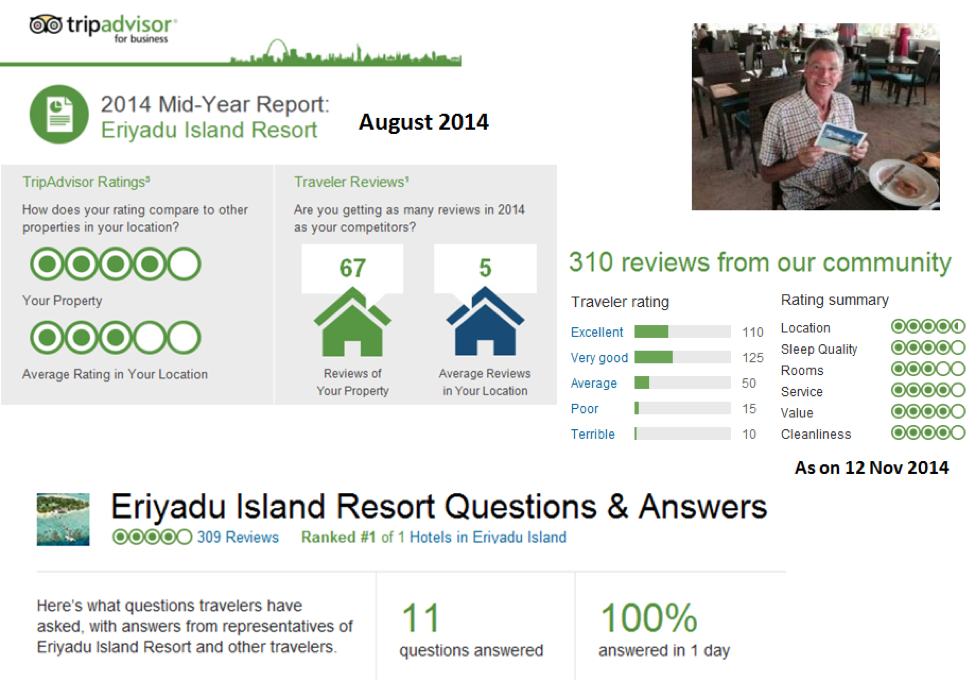
However, a leader can’t do it alone, especially if you have multiple properties and/or a large staff. A leader needs team members, advocates, generals, and ambassadors – whatever you want to call them – to spread and deepen the staff engagement and excitement around your new guest-engagement program. A hotel manager has to show his team how to be engaged. Spend time talking to the guests and seeking feedback. Show the team how to approach guests (and when not to) and engage in conversation. The team will be far more confident and committed if you are engaged as a manager.

Increasing engagement with guests creates numerous opportunities for them to provide feedback. Peak hour lobby presence by the hotel manager and meeting guests on each arrival and departures at Eriyadu Island Resort & Spa, Maldives impacted the hotel’s engagement levels with its guests and helped in positive referral and advocacy.

Engage with Guests Online

Kick it up a notch, and provide exceptional customer service on the social networks. Ask Facebook fans what amenity they would like to see in their hotel room upon arrival. Poll fans and see what they like best about your property. Additionally, Facebook Timeline provides more opportunities to engage with guests than ever before. Brands can share their story and transport fans back in time by posting milestones accompanied with incredible images to the timeline. This new level of engagement provides a deeper connection with fans.

Taking the time to read the reviews about the hotel(s) on TripAdvisor. Is there a trend among the comments? Is there any area to highlight or an opportunity to grow? As a part of the study, Eriyadu Management saw more positive reviews mentioning the staff members by name and also in particular mention of the Hotel Manager and his engagement was much more than ever before. In a recent TripAdvisor review for Eriyadu Island Resort the guest describes the staff as “Hotel manager and front desk are top-notch and would give their right arm to make you feel at home!!!.” And remember those first impressions? Another guest mentioned on Trip Advisor saying “The whole staff is so friendly and helpful.Special the manager there has a magnetic personality. He ist always there for the guests. We like to say thank you for that cause we never saw this before!! .” These are the guests that will recommend the hotel to friends and family. These are our brand advocates.

Many other feedbacks on trip advisor focusing on Hotel Manager’s engagement at Eriyadu Island Resort in the year 14-15 indicates that emotional connection and guest engagement by the leadership influences the guest’s loyalty and advocacy positively as follows:

Some Online Trip Advisor Feedbacks by the Guests: (2014-15)

  • “Special thanks to Mr. Vaibhav Garg and his team for making this trip a memorable one and for ensuring that we felt at home during our stay.”
  • “The staff at the resort were really warm and caring, and the service was exceptionally good. They even arranged a couple of nice surprises for us during the stay 🙂 Special mention to Vaibhav, Aaron and Prince who not not only made sure that we were comfortable at all times, they also speedily resolved a concern that we had during our stay.”
  • “There was the most friendliest staff. The manager was always around us and asked us if everything is alright. If we needed help, we got an excellent help.”
  • “It was a great experience staying at Eriyadu. The island is small but very beautiful. The pool and the deck area is a great place to be. Above all the warm hospitality provided by the amazing staff headed by Mr. Vaibhav Garg (head of operations). Special thanks to all the staff for the warm welcome and making us feel at him. Special thanks to Mr. Vaibhav & Prince (manager-F&B) and his wonderful team of bar and restaurant staff.”
  • From the moment of arrival to the moment of departure, the staff of Eriyadu Island Resort – under the professional guidance of Vaibhav – has taken a real effort to make our stay unforgettableAnd they have succeeded!“We take along with us memories of a small, intimate island on which is located a resort that equally respects customers and the environment. We take along with us the memory of a beautifully designed room (in fact a small house), that made us feel so comfortable and at home. We take along with us the memories of joint meals and the surprise we felt with the many new and delicious recipe’s we encountered (great job by Prince and his team!) We take with us the memory of the enormous number of colourful fish we have seen during snorkelling trips from and around the island.”
  • “Most of all, perhaps, we take along with us the memories of a team of people who carry the term ‘customer centricity’ in their hearts and in their actions! A team of people who manage to keep this idyllic little island in perfect shape whilst always keeping a sharp eye on their customers’ wishes.”
  • “I’ve just returned from a most wonderful time in Eriyadu. The resort is now under new management (a few months now) and I can feel that the GM, Mr V.G. goes out of the way to ensure that I’m taken care of. From the personal welcome right through the send-off. The hospitality extends from his staff as well who greets me by name and is always all-smiles. You can also sense that VG is going the extra mile by looking through all the recent reviews – he answers each and every one of them.”
  • “The staff on Eriyadu are very friendly and nice, they say hello to guest all the times, and play volleyball, table tennis and billiard with us together. The manager, name vaibhav Grag, is really a gentleman. He really helped us a lot on the trip to Male at my last day. We notices that he wave hand to say goodbye to every guest leaving the island. Eriyadu is also a nice place of snorkeling. If possible, I will take my families to Eriyadu in the near future.”
  • “Customer suggestions and complains are responded quickly. When we reflected the views of the birthday arrangements to the staff, the general manager took remedial action next day, improving customer satisfaction. Meanwhile, the staffs are always polite.”
  • “We reached in the morning of 20th June 2014 and were greeted by the operation’s manager, Vaibhav with a warm welcome and the words “welcome to your second home”. Let me assure every one reading this review that Vaibhav and the complete staff at Eriyadu will go that extra mile to make you feel at home. Vaibhav,Prince and everyone from the Eriyadu made sure I have the best birthday ever with the little surprises planned for our stay like having the bed and table being decorated, the small celebration in the spa,, the upgrade to a deluxe room, the small gifts and not to forget the Eriyadu turtle. All very thoughful and definitely brought a tear to my eye.I can go on and on about the resort and the Eriyadu families hospitality but I would like to end by saying A Big Thank you to Vaibhav and the complete Eriyadu family.”
  • “It’s a one of the most beautiful placeses in the world, soon as we landed the Mr.Gaig( Hotle Manager) welcome us to the island and it’s felt like home.”
  • “The staff were amazing, from the waiters, chefs, cleaners and gardeners, but the new management team, who have only been there 2 weeks were amazing. We did have a problem, like you can when abroad, but the way the management handled it was beyond normal limits, thier proffessionalism, curtisy and genuine concern went completly beyond our expectations. This resort is fantastic, a complete relaxation and one that we would have no regrets recommending it to anyone and we will definatly be going back to see “our family” who made us so welcome.”
  • “The management is very caring and helpful. The manager is present everywhere and has offensichlich always keep an eye on his crew.”
  • “Service well organized. Check-in: Personal collection at the dock by the General Manager (GM); this is also not too bad to carry the baggage of the lady. His courteous kindness and helpfulness are leitmotif for all staff, and this of course not all succeed well the same.”
  • “Thus, it is a very small island, you can feel something like a family atmosphere. It starts with the general manager, goes beyond the reception, the restaurant to the room boys and gardeners.
  • “We were beginning November 2014 for 2 weeks on Eriyadu, Maldives. Beforehand I was looking for an affordable resort that offers gluten-free meals. I then contacted Vaibhav Garg (Head of Operations) and he told me that this was not a problem with advance notice. And it was really great!”
  • “This time we eriyadu, fully convinced with the right price-performance ratio. Very friendly welcome by the new hotel manager Mr. Vhaibar, professional and attentive.
  • “The management and staff are very friendly and always strive to meet your every need.”
  • “The check in and check out was swift and as smooth as it could be. One thing worth noticing is that Mr. Vaibhav and his team makes it a point to receive every guest at the jetty area (also at departure). It really add the extra touch. Hospitality at its best!!!”
  • “The management is absolutely great, it starts with the personal greeting on the web (and later personal adoption), one encounters a corporate officer you will be immediately asked if everything was okay since. The staff in all areas are extremely friendly and very committed.”
  • “On the occasion of my 50th birthday we have of 30.07. to 13.08.2014 spent a dreamlike holiday eriyadu. Mr Garg (General Manager) and Mr. Prince (F & B Manager) who made my birthday by many small surprises and gifts for an unforgettable experience. The friendly, personal service throughout the holiday was a new positive experience for us. All the staff were always friendly and courteous.”
  • “Particularly noteworthy are the friendliness of all the staff and personal approach by the Manager. Every day we were asked if everything is in order. If not, take immediate corrective action has been created.”
  • “We were in June 10 days on the island and it exceeded our expectations. After all the negative reviews we did not have all too many expectations. Immediately upon arrival we were welcomed generously and immediately felt welcome. What staff very friendly and helpful and always up for a laugh. We were taken at 6 clock from the manager personally to the boat and adopted. This is not, of course, and shows that the well-being of our guests is paramount. Thank you ERYADU”
  •  “…A compliment to the management that has always tried to find a great solution and have then also adopted at the holiday guests personally.”
  • “Wir learned the eriyadu has a new management. We met the manager Mr. Vaibhav Garg know personally. does not take read it to mingle with the guests and was in accordance with their wishes and suggestions to erkundigen.Auch the Food and Beverage Manager and is always present. From manager to all employees on the island you were looked after really. A very pleasant feeling. Since we had from last year since comparisons, we found on this island is was.Der gym was renovated and equipped with modern appliances. All thatched roofs replaced. The bungalows should be renovated soon. Small gestures like flowers on the towels round service ab.Vor all you could see that here the service to the guest again No.1 priority sneezed. The buffet is delicious and vielfältig.Das clientele mostly German speaking guests D, CH On leaving we were personally approved by the Manager. You come as a stranger and leave as a friend.”

picture13

Evaluate and Measure Success

picture14

Once the guest engagement program is in place, evaluate guest satisfaction scores month by month. Look at the qualitative and quantitative research.

Eriyadu Island Resort & Spa’s success story with its positioning and positive referral was encouraging for the whole team.


picture16

Activity seek feedback

Be sure to seek feedback from your guests through in-house programs and international travel websites. If you are not actively seeking feedback, it is difficult to track your progress. Feedback is perhaps the best tool for improvement and be sure to respond to feedback (positive or negative) to acknowledge that you have taking it seriously. An inspired staff that delivers the utmost in customer service onsite and online creates happy guests, and happy guests will return and share their experiences through word of mouth and online. Engagement is one of the big ‘buzz’ words in the hospitality world and could prove to be one of the most important for future success. In recent years guests would simply be happy with a great product and a high level of service and many hospitality business have become very good in these areas. Now with the availability of information and significant increase in choice, guests are seeking experiences where they feel a connection with your brand and will most certainly enjoy high levels of guest engagement. Hospitality businesses who are engaged with guests are said to receive significant revenue benefits and experience much higher levels of guest loyalty.

Pampering the guest

We talk about pampering the guests often and this literally means ‘pampering’ the guest. As we have mentioned above, do everything you can to make your guests feel comfortable while at your property. Do everything you can to fix any potential issues which may arise and most importantly check the satisfaction before checkout while you still have a chance.

picture19
 

picture17

Mrs & Mr Hermen who had a complaint during their stay however their stay experience was turned into a delighted one by the resort team while “in stay”

Technology: good or bad?

Technology is becoming an increasingly significant part (and often an expectation) of the guest experience. Technology helps in many ways to improve the guest experience but do not let it become a barrier to ‘emotional engagement’. Hotel frontline should be aware of this when interacting with the guests. Do they make eye contact and not focus on the computer screen? Do they smile and greet the guest when passing and do they make conversation while taking an order on a handheld device? Technology will always be a key to operations but it has to be ensured that frontline team does not leave out the human touch.

picture20

Conclusion:

Hotel brands have always understood that 4 walls do not make a hotel and the human element is often what brings success and repeat business through the doors. Brand Standards and SOPs are vital and play a key role in the ‘guest journey’, however, ‘emotional engagement’ is becoming far more important to the overall guest experience and what makes brands standout from the competition. There are many angles to ‘emotional engagement’ and this will clearly be a key part in gaining an advantage in an increasing competitive market. Towards conclusion, let’s also take some time to think about how we can help frontline team to become more engaged on an emotional level as hotel brands will rely more on loyalty and this comes through an ‘emotional’ connection.


manVaibhav Garg is the Cluster Director of Talent & Culture at Accor Hotels, Maldives and former resort manager at Eriyadu Island Resort & Spa, Maldives.

vaibhav.garg@accor.com | gargsindia@gmail.com


REFERENCES:

https://en.tripadvisor.com.hk/ShowUserReviews-g6855204-d478386-r211612674-Eriyadu_Island_Resort-Eriyadu_Island.html

https://www.tripadvisor.com/Hotel_Review-g6855204-d478386-Reviews-Eriyadu_Island_Resort-Eriyadu_Island.html

https://www.tripadvisor.com/ShowUserReviews-g6855204-d478386-r244649165-Eriyadu_Island_Resort-Eriyadu_Island.html