Call for papers for a Special Issue of Journal of Business Research (JBR).

“The Impact of Digitalization on Exporting“

Guest Editors: Brouthers KD, Thompson FM, He X & Nakos G

Deadline: 31 July 2025

The impact of digitalization on exporting

International business and marketing researchers have a long history of exploring issues related to firm exporting.  Exporting is the most popular form of international involvement in all countries around the world and is often encouraged by policymakers because it has a significant impact on domestic income and employment. Past research has explored issues like differences between exporters and non-exporters (Haddoud et al., 2021), barriers to exporting (Brouthers et al, 2009), how policymakers increase exporting through trade promotion activities (Wilkinson & Brouthers, 2006), country or market selection (Brouthers & Nakos, 2005), the choice of export channel (He, Brouthers & Filatotchev, 2013; Li, He & Sousa, 2017), and export performance (Chen, Sousa & He, 2016). These studies have provided valuable insights into how managers and policymakers can improve exporting. But recent changes in digital technology have introduced new types of competitors (digital businesses) and are changing the way businesses operate and internationalize (Katsikeas, Leonidou & Zeriti, 2020). In this special issue we explore how digitalization is impacting exporting.

Does digitalization encourage more firms to export? One critical issue that has just begun to be explored is whether digitalization will increase the number of firms exporting. Of course, policymakers hope this is the case since greater exports lead to improved balance of payments, greater domestic employment and increased tax revenue. But firm managers also like exporting because it is a relatively inexpensive way to expand sales, increase the customer base, and potentially improve profits. Recent digital research has begun exploring these issues with papers like Añón Higón and Bonvin (2024), Gong, He and Lengler (2024) and Quarato, Pini, and Positano (2020).

Does digitalization decrease barriers to exporting or increase them? While digitalization promises to open the world to all firms, the reality appears to be very different. Digitalization has decreased some barriers to exporting, reducing the costs and complexity of dealing in foreign markets by being a complementor on an established digital platform such as Amazon or Alibaba, making payments easier through online systems such as Paypal, and easing international communications and translations. Yet digitalization has also generated some additional barriers for firms wishing to internationalize (Meyer et al., 2023). For example, digitalization has generated increased competition as more firms enter foreign markets, barriers related to privacy of customer information, protection of customer rights and other societal differences (Demmers, Weihrauch & Mattison Thompson, 2022; Verbeke & Hutzschenreuter, 2021). How can firms deal with these changes in international barriers?

Does digitalization impact exporting of family firms differently than non-family firms? Family firm researchers have noted a number of differences between family and non-family firms related to international activities (Arregle, Chirico, Kano, Kundu, Majocchi & Schulze, 2021; Debellis, Rondi, Plakoyiannaki & De Massis, 2021). Family firms are often less international and participate less in international activities like joint ventures. But how does digitalization impact these family/non-family differences? Do new digital export channels increase the propensity of family firms to internationalize and protect their socio-emotional wealth?

Does digitalization provide new channels for exporting? Recent literature (Brouthers et al., 2022) suggests that digitalization has facilitated the creation of new international sales and distribution channels. A recent review study has shown that digital platforms help businesses go international, although the process is not a straightforward one (Gong, He & Lengler, 2024). These non-traditional channels may help improve export performance, but we know little about (1) how firms choose between these new digital channels, (2) how to make each channel work, and (3) performance differences between these channels.

Does digitalization of exporting make it easier for firms to exit and reenter foreign markets? Research on foreign market exits (Sandberg, Sui & Baum, 2019) and re-entry (Crick, Crick & Chaudhry, 2020; Sousa, He, Lengler & Tang, 2021) have brought to light important dynamics in exporting. Digitalization offers firms a chance to enter former export markets with a new channel that might be better at reaching potential customers. In addition, these new digital channels might replace existing traditional channels in export markets providing a more efficient way to serve these foreign markets.

How can firms use the unique features offered by digital technologies (like eWOM, clicking, sharing, trustmarks) to improve the performance of exporting operations? Recent scholarship (Dong, He, and Blut, 2024) reveals different effects of digital resources, capabilities and strategy on firm export performance. Besides offering new ways to enter foreign markets, digital technologies provide new opportunities for exporting firms to gather information about their customers, gain insights about potential changes in products/services offered, and customize customer communications. How can exporting firms use e-word of mouth, clicking and sharing behaviors to drive increase foreign sales and customer satisfaction? While these is a growing stream of research looking at digital customer engagement (Mattison Thompson & Brouthers, 2021), few studies directly address the issue of how these features can be used to improve exporting (Rialp, Rialp & López-Belbeze, 2024; Mattison Thompson, Tuzovic & Braun, 2019).

In this special issue, we welcome papers dealing with these and other issues at the intersection of digitalization and exporting. For example:

  1. Do digital firms use different methods to export compared to traditional firms?
  2. Does digitalization encourage more ‘born exporting’?
  3. How can policymakers use digital technology to encourage more firms to export?
  4. How do digital technologies impact barriers to exporting and what can firms do about these barriers?
  5. Does digitalization impact exporting of SMEs differently from large firms?
  6. What changes to public policy can encourage more firms to export through digital channels?
  7. Should firms combine traditional exporting channels with new digital channels?
  8. What is the economic impact of digital channels of exporting versus traditional channels?
  9. How can firms direct digital investment, i.e. in tangible and intangible assets, to drive export performance?
  10. How does digitalization impact different aspects of export performance, such as export sales, export intensity, export profitability, and resilience?
  11. How do exporting firms build up a digital orientation in guiding their digitalization process?
  12. How can exporting firms use digital technologies to achieve CSR and/or sustainability goals?
  13. How does digitalization help exporting firms to participate in global supply chains?
  14. What is the influence of digital technologies on exporter-importer relations?
  15. How does the use of digital technologies impact an exporting firm’s consumer privacy considerations, i.e. how are these facilitated/hindered by technology?              

Review process timeline

Paper submission due date July 31, 2025.
First decision on papers – desk rejects or send to reviewers – August 31, 2025.

Guest Editors:
Keith D. Brouthers
Frauke Mattison Thompson
Xinming He
George Nakos

More info:

Call for papers for a Special Issue of Journal of Business Research (JBR).

Strength-Based Approaches to Customer Vulnerability: Implications for Service Research and Practice

Guest Editors: Russell-Bennett R, Kabadayi S & Alkire L.

Deadline: 30 November 2024

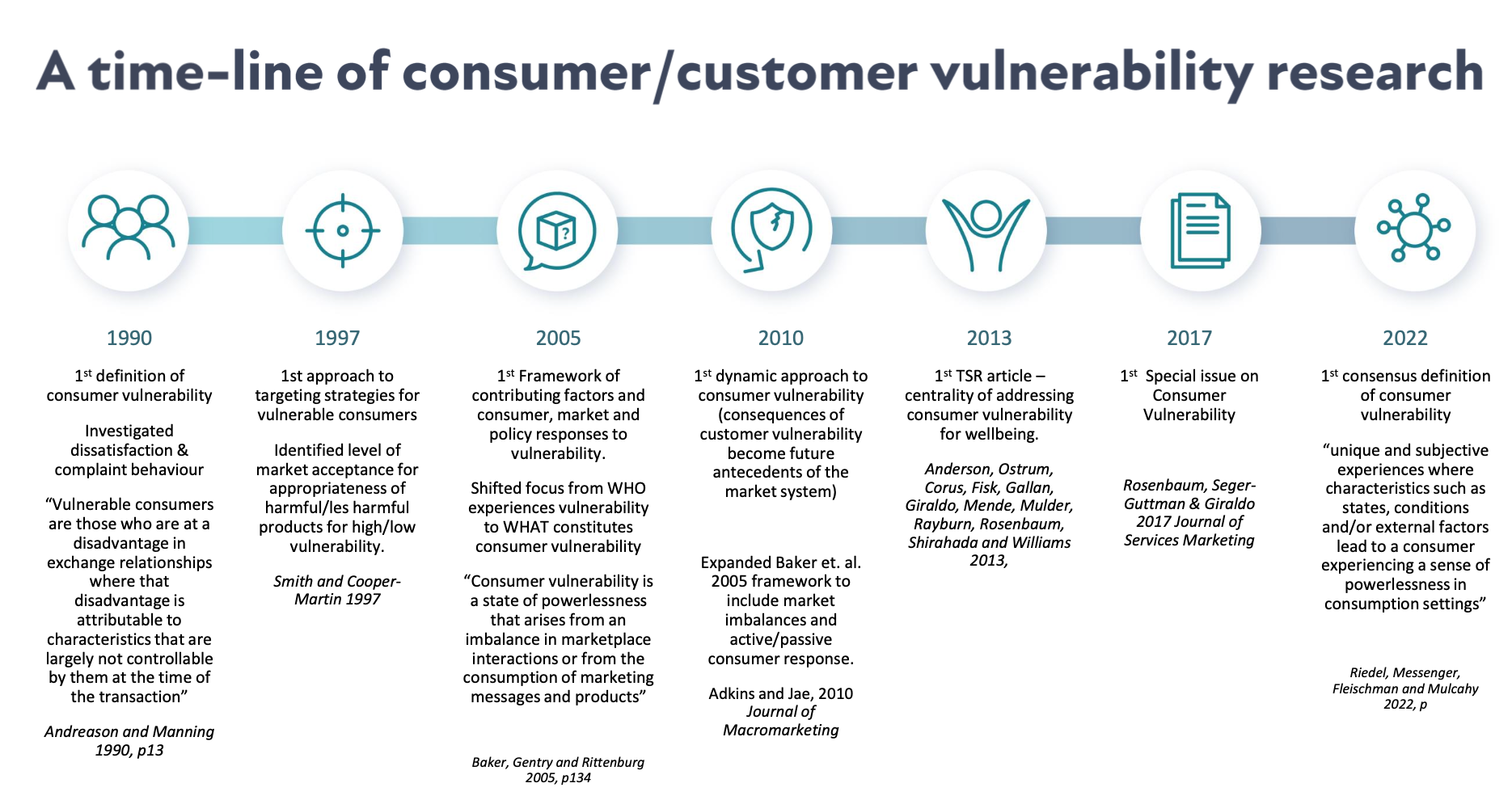
Since 2005 (Baker et al., 2005), customer vulnerability has been receiving increasing attention across business disciplines (e.g., Basu et al., 2023; Hill and Sharma, 2020; Khare and Jain 2022; Raciti et al., 2022) as business scholars recognize the importance of designing and delivering services for all customers. Within the service discipline, there has been an expansion of focus from profit to include people and planet with investigations into vulnerability-related topics ranging from the digital divide (see Fisk et al., 2023), refugees (see Nasr and Fisk, 2019; Boenigk et al., 2021), homelessness (Russell-Bennett et al., 2023) and educationally disadvantaged students (see Raciti et al., 2022).

Within this stream of customer vulnerability research, the strength-based approach has gained recognition as a contemporary lens to study vulnerability experiences. The strength-based approach defines the experience of vulnerability as individuals’ subjective perceptions of susceptibility which are part of the human condition, experienced over time, prompt introspection, and give rise to greater strength and resilience (Raciti et al., 2022). The strength-based approach is a practice framework well established in the social science disciplines of social work, disability, education, and psychology as a practice-based approach (Mollard et al., 2020, Pulla 2017, Saleeby 1996). In these disciplines, the strength-based approach critiques pathologizing people and using labels such as powerless or incapable. Instead, these human-centric disciplines advocate for identifying the strengths in the service ecosystem (individuals, communities, and organizations) that can be leveraged or developed to address experiences of vulnerability.

The strength-based approach recognizes that circumstances of vulnerability will vary over time and place and require different combinations of strengths of different actors. For instance, a temporary experience of vulnerability such as pregnancy might involve leveraging the strengths of the mother, the family and employer whereas an enduring experience of vulnerability such as chronic illness might involve developing strengths in the health system and an individual’s community. In this way, the strength-based approach goes beyond a sole focus on the individual to a focus on the context of support for the individual, the strengths of different actors in the service ecosystem are leveraged (Kabadayi, Livne-Tarandach and Pirson 2023). A strength-based approach is thus applied in different ways based on the capabilities of the service ecosystem (and actors) that surround the individual/family/group who are experiencing vulnerability.

It is important to note that the strength-based approach does not deny the very real problems that exist or negative triggers of vulnerability such as trauma or injury, nor does the strength-based approach assume that all that is needed is the capabilities of individuals (Russell-Bennett et al., 2023). Rather the strength-based approach focuses on what is possible through the collective effort of the service ecosystem instead of what is missing or abnormal (Saleeby, 1996, Raciti et al., 2022). In this special issue, we follow the strength-based approach outlined by Raciti et al. (2022) that conceptualizes customer vulnerability as a state (circumstance) not a trait (inherent individual characteristic), subjective, experienced by all humans and where the experience of vulnerability is different to the experience of hardship. Importantly, the strength-based approach recognizes that there are strengths in individuals, families, and communities (Saleeby 1996) that can be leveraged or developed for improvement and mitigation of the experience of vulnerability.

Given the novelty of the strength-based approach to customer vulnerability in service research, this special issue has a wide scope. We expect this special issue to receive manuscripts not only from service scholars, but also from colleagues in other business or social science disciplines that have a focus on customer vulnerability. We are seeking a multidisciplinary collection of papers and will prioritize papers that draw on literature from outside of business research. In particular, we are seeking deep conceptual work as well as empirical evidence rather than bibliometric or literature review articles. The strength-based approach seeks to consider the environmental factors affecting individuals, so articles should consider the role of the service ecosystem and contextual factors.

Potential research themes and topics in this special issue could include, not limited to, the following:
– Conceptualization of the strength-based approach to customer vulnerability: what are the elements or dimensions?
– Empirical evidence of the effectiveness of the strength-based approach (compared to other approaches) in addressing vulnerabilities: what impact does the strength-based approach to customer vulnerability have socially or environmentally?
– Application of the strength-based approach to customer vulnerability for Transformative Service Initiatives (TSIs): How can the strength-based approach to customer vulnerability be designed and delivered?
– Services ecosystems and the strength-based approach to customer vulnerability: How can a strength-based approach address tensions and fracture points in a service ecosystem?
– Cross-cultural determinants of the strength-based approach to customer vulnerability: Does culture (or cultural dimensions) impact the adoption of a strength-based approach to vulnerabilities?
– Boundary conditions for the strength-based approach to customer vulnerability: What are the contextual constraints on implementing a strength-based approach, and how might they be addressed?
– Organizational and human enablers and barriers to strength-based approach to vulnerabilities: What are the capabilities and strengths of different actors in the service ecosystem for specific contexts, such as cognitive impairment, refugees, low-income earners or financial stress?
– Methodological approaches to the strength-based approach to vulnerabilities: How can strength-based approach strategies be measured or evaluated?
– Practices of the strength-based approach to customer vulnerability: What does a strength-based approach look like in practice for different service organizations (e.g., government, non-profit, commercial) in different service contexts (e.g., education, health, transport, tourism, hospitality, finance, utilities)?
– Role of services constructs in the strength-based approach to customer vulnerability: What service constructs/concepts are key antecedents, outcomes, moderators, or mediators of a strength-based approach to customer vulnerability?
– Critical marketing and strength-based approach to customer vulnerability: How might service scholars take a critical approach to strength-based approach to customer vulnerability?
– Role of strength-based approach in extending the TSR work: How can strength-based approach contribute to well-being research?
– How might the strength-based approach be applied to achieve service outcomes such as customer experience, value, engagement and loyalty?
– What is the role of service technology in adopting strength-based approach to customer vulnerability in services?
– How can a strength-based approach be adopted when addressing sustainability concerns?
– What can service researchers learn from other societal-focused business disciplines that use the strength-based approach i.e. TCR or social marketing?
– What can service researchers learn from other societal-focused social science disciplines that use the strength-based approach such as social work, education, psychology, or justice?
– How might service marketing communications adopt a strength-based approach (e.g., social media, advertising, public relations, service language)?

Useful resources
Explanation of a strength-based approach in plain English. A useful guide to understanding a a strength-based approach is a report by Hammond and Zimmerman 2010. This guide outlines 9 principles and a language glossary.
Interventions using a strengths-based approach. The UK Social Care Institute for Excellence has a number of resources that demonstrate how the strengths-based approach work in different settings.
Organization case studies applying a strengths-based approach to customer vulnerability. A customer vulnerability symposium was hosted in Australia in 2023 with the theme of a strengths-based approach. There were speakers from organizations who adopt a strengths-based approach listed in the speaker program.
Toolkit of psychological interventions. Positive Psychology has a website with a free toolkit on using strengths-based approaches in psychological interventions. Download it here

Submission portal opens: October 1, 2024
Paper submission deadline: November 30, 2024

Guest Editors:
Rebekah Russell-Bennett, Professor, University of Canberra, Bruce, Australia
Sertan Kabadayi, Professor, Fordham University, Bronx, New York, USA
Linda Alkire, Associate Professor, Texas State University, San Marcos, Texas, USA

Full call here.
Full presentation here:

Special Issue of Journal of Business Research (JBR)

Fostering Consumers’ Climate (Change) Engagement

Guest Co-Editors: Hollebeek L, Filieri R, Calder B & Sprott D

Deadline: 1 May 2024

In the last fifteen years, scholarly interest in the consumer- or customer engagement concept, defined as a consumer’s (customer’s) resource investment in his/her brand interactions (Hollebeek et al., 2019), has gained traction. While important insight has been gleaned into the concept’s definition, its (e.g., cognitive, emotional, and behavioral) dimensionality, and its nomological network (e.g., Bazi et al., 2023; Rubin et al., 2022; Sprott et al., 2009; Calder et al., 2009), the development of further acumen in this topic area remains a key research priority, given the concept’s centrality to firm- and brand performance (M.S.I., 2022; Ho et al., 2020). In particular, understanding of consumers’ sustainable, or green, engagement with brands, products, and firms lags behind, warranting further investigation (e.g., Pucci et al., 2020; Chuah et al., 2020).

In parallel, contemporary societies are increasingly focused on climate change, or a change in global or regional climate or weather patterns attributed to rising levels of atmospheric carbon dioxide produced by the use of fossil fuels (United Nations, 2022a), on our everyday lives and future generations (e.g., Rashidi-Sabet et al., 2022; Mende and Misra, 2021). In an effort to combat climate change, stakeholders, including firms, lobby groups, and governments, are increasingly incentivizing consumers to engage with more sustainable offerings (Sarkar et al., 2022; Odou and Schill, 2020). For example, different governments worldwide are offering tax credits on the purchase of electric cars, and a growing range of apps (e.g., carbon footprint, or CO2, trackers) is available to help consumers monitor, or offset, their environment-impacting behavior by engaging in more climate positive actions (Hall, 2018).

Despite the emerging insight into the, to date, largely disparate topic areas of consumer engagement and climate change (e.g., Sumrin et al., 2021; Odou and Schill, 2020), little is known regarding their theoretical interface (Ojala, 2023), exposing a key literature-based gap. Specifically, the drivers, characteristics, and effects of consumers’ engagement with products, services, brands, and/or firms in the face of climate change remain tenuous to date. Addressing this gap, this Special Issue examines the theoretical interface of consumers’ engagement with products, services, brands, or firms in an era of climate change, which we designate consumers’ climate (change) engagement.

On the one hand, individuals’ engagement with brands may be detrimental to, or accelerate, climate change (e.g., by raising users’ energy needs, contributing to excess consumption, or creating growing levels of emissions and/or waste; Wooliscroft and Ganglmair-Wooliscroft, 2018). However, on the other hand, consumers’ engagement with specific brand-related offerings, touchpoints, or initiatives can be strategically leveraged to induce socio-cultural change and transition pathways that can alter, decelerate, or minimize the course of climate change globally (W.E.F., 2021; Mostaghel and Koteshwar, 2021). For example, future Metaverse-based retailing, or socializing, apps can help reduce consumers’ transportation needs (Belk et al., 2022), potentially shifting their engagement with brands to more sustainable patterns (e.g., by lowering their carbon emissions). It is, therefore, pivotal to stimulate consumers’ positive climate (change) engagement, while minimizing their negative engagement in this regard (e.g., by resisting climate change initiatives; e.g., Dwivedi et al., 2023).

Overall, an important opportunity exists for marketers to strategically develop, and leverage, consumers’ climate (change) engagement to cultivate their greener, more pro-environmental (e.g., Net Zero) behavior and decelerate the pace, and effects, of climate change (Odou and Schill, 2020; O’Neill and Sheehan, 2013). These initiatives are, in turn, expected to contribute to the World Economic Forum’s Climate Change Goals (W.E.F., 2022) and the United Nations’ Sustainable Development Goals (U.N., 2022b; Smith et al., 2020).

In response to these developments, this Special Issue welcomes submissions addressing key hallmarks, drivers, outcomes, and/or contingency factors impacting consumers’ climate (change) engagement. We welcome conceptual, methodological, qualitative, quantitative, or pluralistic contributions grounded in relevant perspectives that address issues, including, but not limited to, the following:
– How do marketers best leverage consumers’ climate (change) engagement to foster their desirable, climate positive behaviors, while also contributing to the firm’s elevated (e.g., bottom-line) performance?
– What can firms do to optimize consumers’ positive climate (change) engagement (e.g., by nurturing their more sustainable brand engagement), while minimizing their negative climate (change) engagement (e.g., by opposing climate change campaigns)?
– How do marketers best foster consumers’ elevated, positive climate (change) engagement, while guarding against their climate-related disengagement (i.e., low engagement)?
– To what extent, how, and why does consumers’ climate (change) engagement affect their product selection, purchase, usage, and disposal behavior?
– How does consumers’ climate (change) engagement impact their wellbeing?
– To what extent may other firm stakeholders’ (e.g., frontline service employees’) climate (change) engagement impact, or spill over to, consumers’ climate (change) engagement?
– How might specific technologies, or innovations, be used, applied, or leveraged to boost consumers’ climate (change) engagement, and what are their respective behavioral effects?
– What theories, or theoretical perspectives, can be used to conceptualize, or model, consumers’ climate (change) engagement and their downstream climate-related behaviors?
– How can consumers’ climate (change) engagement be incorporated into firms’ climate transition plans and/or brand purpose-based brand strategy?
– How may consumers’ climate (change) engagement be affected by (e.g., climate-related) mis- or disinformation? What can firms do to address these issues?
– What role can consumers’, and/or other firm stakeholders’, climate (change) engagement take in the firm’s Environmental, Social, and Governance (E.S.G.) implementation, metrics, and reporting?

Guest Editors:
Linda D. Hollebeek, Ph.D., Vilnius University, Tallinn University of Technology, Umea University, Lund University, and University of Johannesburg
Raffaele Filieri, Ph.D., Audencia Business School, France
Bobby J. Calder, Ph.D., Kellogg School of Management, Northwestern University, USA
David E. Sprott, Ph.D., Drucker School of Management, Claremont Graduate University, USA

Manuscript submission information:
The deadline for Special Issue submissions is May 1, 2024, via JBR’s online submission portal. When submitting your manuscript, please select the Special Issue (SI): “Climate Change Engagement” from the drop-down menu. Submissions should be prepared in accordance with the editorial policy and author guidelines.

Full call available here.

Special Issue of Journal of Business Research (JBR)

Service Research in Business-to-Business Marketing

Guest Co-Editors: Zaki M, Witell L, Gustafsson A, McColl-Kennedy J & Fombelle P

Deadline: 1 February 2024

The goal of this special issue is to advance our understanding of what service research can contribute with to better theorize about and understand Business-to-Business Markets. The last years has been challenging, as the pandemic has continued to affect all organisations, particularly their ambitions for digital transformation, creating better service experiences and achieve sustainability. In many cases, plans for digitalisation have been accelerated in order to support seamless operations, maintain – or improve – service experience and, ultimately, guarantee economic survival.

Main themes:
– Digital Transformation
– Service Experience
– Ethics and Sustainability

Paper Submission Deadline:
1 February 2024

Guest editors:
– Mohamed Zaki (University of Cambridge, UK)
Lars Witell (Linköping University, Sweden)
– Anders Gustafsson (BI Norwegian Business School, Norway)
– Janet McColl-Kennedy (University of Queensland, Australia)
– Paul Fombelle (Northeastern University, US)

Full call for paper (CfP) available here.

Special Issue of Journal of Business Research

Unanticipated and Unintended Consequences of Service Robots in the Frontline

Guest Editors: Heirati N, Pitardi V, Jayawardhena C, Kunz W, Stefanie Paluch S & Wirtz J

Deadline: 31 March 2023

AI applications, such as service robots are the future of service technology (Choi et al., 2021). Amazon, Starbucks, Spotify, Mastercard are prominent examples of brands that employ various artificial intelligence (AI) applications to improve customer experience (Grewal et al., 2020; Huang & Rust, 2018; Wirtz et al., 2018). AI is distinct from general information technology, in that, it involves technologies that can learn, connect, adapt, and display aspects of human intelligence (Huang & Rust, 2018). Service robots are a specific application of AI technology and represent the interface for the customer interaction and delivery channel for the service and are defined as “system-based autonomous and adaptable interfaces that interact, communicate and deliver service to an organization’s customers” (Wirtz et al., 2018, p. 909). There is a growing interest among academics in how AI and service robots are shaking up the business world (Haenlein & Kaplan, 2021; Hollebeek et al., 2021). While studies have started investigating how AI-powered service robots are changing the ways consumers interact with service providers (Mende et al., 2019; McLay et al., 2021), the impact of such technology on the overall customer service experience remains largely unexplored and unintended consequences of such interactions are still unclear.

Topics of interest include five main themes:
– Service Robots and customer emotions;
– Service Robots and customer misbehaviour;
– Service Robots and the changing role of customers and service employees;
– Ethical and privacy concerns in Service robots;
– Service Robots and post-purchasing behaviour.

CALL FOR PAPER
In this special issue of the Journal of Business Research, we will examine papers that expand our understanding of the theoretical frameworks, help retailers and service organizations understand how services robots can affect a customer journey from pre-purchase touchpoints to service experience and post-purchasing outcomes. We are interested in both qualitative and quantitative inquiries that explore topics in this domain. We encourage collaborative work between scholars and managers/companies and data from diverse sources, including secondary data, lab and field experiments, performance-related data, ethnographic work, etc. We believe that the empirical study of service robots in service settings, given the nascent nature of this research in marketing, provides ideal opportunities for multidisciplinary research.
Article submission deadline: 31 March 2023
— More info here.

ONLINE WORKSHOP — 15 September 2022 (09:00 – 16:00)
This workshop will explore topics related to the unanticipated and unintended consequences of service robots in the frontline from a multitude of domains and will bring together researchers from various disciplines including AI, marketing management, consumer psychology, and the digital economy. It will encourage collaborative work between scholars and managers/companies and data from diverse sources such as secondary data, lab and field experiments, performance-related data, ethnographic work, etc.
Abstract deadline (1000 words): 20 August 2022
— More info here.

Organizers
– Dr Valentina Pitardi, Department of Marketing and Retail Management, Surrey Business School
– Dr Nima Heirati, Department of Marketing and Retail Management, Surrey Business School
– Prof Chanaka Jayawardhena, Department of Marketing and Retail Management, Surrey Business School
– Professor Werner Kunz, University of Massachusetts Boston, USA
Professor Stefanie Paluch, RWTH Aachen University, Germany
– Professor Jochen Wirtz, NUS Business School, National University of Singapore, Singapore

Special Issue in Journal of Business Research.

Towards Impactful Customer Experiences in Service

Guest editors: De Keyser A, Jaakkola E, Verleye K, Becker L, & Alexander M.

Deadline: 30 November 2022
Extended to 31 January 2023.

The goal of this special issue (SI) is to advance the burgeoning customer experience (CX) field by publishing research that aids organizations in delivering impactful CXs. The SI focuses on examining how an organization’s CX-focus can translate into value for customer, the organization and its stakeholders, and society at large.

The CX idea has entered the service field at an unprecedented speed, and literature increasingly agrees on what CX is and what it is not (cf. Lemon and Verhoef 2016; Becker and Jaakkola 2020; De Keyser et al. 2020). CX is now widely embraced in academic literature and business practice as it is positively associated with many key outcomes like brand/firm awareness, customer satisfaction and retention, and customer value. However, the multidimensional, and elusive nature of the concept continues to be challenging to organizations both in the implementation and assessment of impact. While CX sits atop the managerial agenda, many organizations struggle to walk the talk. A recent survey by Harvard Business Review Analytic Services (2021), for instance, shows that, while many managers indicated CX as their top priority, only 17% rated themselves as CX leaders today.

Against this background, this special issue invites submissions that tackle questions related to delivering impactful CXs. We welcome research from different disciplines and are open to both conceptual and empirical work. Potential questions of interest include but are not limited to:
– How can CX impact be understood and measured?
– What does impactful CX mean for customers, users, and/or other beneficiaries?
– What CX measurement methods can be used in what circumstances?
– How can organizations capture the return-on-CX investments?
– How can organizations best organize to become CX-focused?
– What role can service design play in generating impactful CX in service?
– How do service business models affect the impact that CX generates for organizations?
– How can service technology infusion contribute to impactful CX?
– What is the impact of the CX on key outcomes in service?
– What are the key contextual contingencies for the impact of CX?
– How does CX affect customer value and engagement over time?
– Under which conditions does CX boost the firm performance?
– What are the challenges of implementing impactful CX strategies?
– In what ways can impactful CX contribute to a better world?

Papers submitted will undergo a double-blind review process, and must adhere to the guidelines of JBR. All manuscripts should be submitted through the JBR online submission system and select ‘Special Issue: Impactful CX in Service’ as manuscript type.

The SI would particularly welcome submissions from the ‘Customer Experience and Journeys’ track at SERVSIG2022, but is open to any author team submission.

For more information, you may contact the guest editors.

Full call available here.

Special Issue in Journal of Business Research.

A Blockchain-Based Approach to Marketing in the Sharing Economy

Guest Editors: T. Ming Tan, J. Salo, T.G. Brashear Alejandro, G. Tan Wei Han, K.B. Ooi, & Y.K. Dwivedi

Deadline: 15 August 2022

The research on the blockchain is essential across all business school disciplines as this technology is expected to transform business processes (Tan et al., 2021), operations (Filimonau & Naumova, 2020), and marketing (Kumar, 2018), and subsequently result in a radical change in organizations (Tapscott & Tapscott, 2017). Importantly, blockchain technology offers a new model of economic coordination and governance in the sharing economy, as well as to the metaverse (Tan & Salo, 2021).

Although prior research investigated blockchain applications, such as their benefits/values, challenges, and potential (Hughes et al., 2019), most business school scholars examine how blockchain is related to finance (Ali et al., 2020), supply chain (Hew et al., 2020; Tsolakis et al., 2021), and human resource domains (Christ & Helliar, 2021). Limited attention has been given to providing on how marketing research should be systematically and theoretically examined that underlines the three key foundations of marketing (i.e., institutions, processes, and value creation; Tan & Salo, 2021). Indeed, numerous prominent scholars (e.g., Cui et al., 2020; de Villiers et al., 2021; Eckhardt et al., 2019; Gligor et al., 2021; Kumar, 2018) have listed blockchain as one of the most influential factors that affect marketing in the sharing economy.

Our goal is to enrich and extend prior research on blockchain by examining state-of-the-art marketing theories and implications for the sharing economy. We welcome conceptual, methodological, qualitative, or quantitative contributions grounded in a range of perspectives that offer insights or answers to this goal. Papers considered for the Special Issue may focus on topics including, but not limited to, the following research questions:
– Since consumers/prosumers will have a higher level of institutional roles when they become influential developers, how does a consumer or prosumer identity alter when the person is engaged in different stages of blockchain identity self-congruence?
– What kind of institutional roles are played by the consumers/prosumers in the blockchain-based sharing economy, and how could these institutional roles potentially be misused or abused?
– How the blockchain-based sharing economy is changing how we attach to brands, how we consume them, and how we build loyal, versus negative, relationships with brands?
– As transparency is increased, most likely privacy and data management issues, are brought to the front; how does consumer/prosumer react to the lost privacy or possible data management challenges that might occur in the blockchain-based sharing economy?
– Since blockchain allows consumers/prosumers to control their right of ownership of online properties (i.e., creating self-sovereign identity) in the sharing economy, what kind of additional values will be co-created among consumers/prosumers and what are the tradeoffs (e.g., sharing privacy while monetizing personal data) during the process?
– How sustainable consumption is seen from the value-creation point of view when information is more transparent and the available heuristics for consumer decision-making increase in quantity and quality in the blockchain-based sharing economy?
– How does information about the origin of components (e.g., the raw materials of vegan food) badly influence the business and consumer choices in the blockchain-based sharing economy, as well the firm’s effort on green marketing?
– What is the role of the firm or firms in innovating when the blockchain-based sharing economy increases the number of collaborative options with other firms, the network of firms, consumers, and prosumers alike?
– If and when a blockchain-based sharing economy creates options for marketing managers to increase origin and verification possibilities, are marketing managers jumping in or hesitating in their decisions? Why do they behave as they do?
– How to handle the transition from a traditional sharing economy to a blockchain-based sharing economy while creating omnichannel customer experiences?

More info here.

Special Issue of Journal of Business Research (JBR)

The Dark Side of the Sharing Economy

Guest Co-Editors: Schaefers T., Leban M., & Woisetschläger D.

Deadline: 15 September 2022

Traditionally, marketing was focused on exchanges that involved the transfer of ownership. However, digitalization has given rise to exchanges that provide temporary access instead of permanent ownership. This idea has been themed the sharing economy, defined as “a scalable socioeconomic system that employs technology-enabled platforms to provide users with temporary access to tangible and intangible resources” (Eckhardt et al., 2019, p. 7). Sharing economy business models include mobility services (e.g., car and e-scooter sharing), fashion rentals, software-as-a-service, shared office space (e.g., WeWork), outcome-based contracts for industrial equipment, and different peer-to-peer offers (e.g., Airbnb, Uber). The possibility of shared access has transformed various aspects of consumers’ lives, as it offers alternatives to conventional, ownership-based consumption (Bardhi and Eckhardt, 2012). Additionally, it has also given rise to more complex interactions between different actors involved in value creation, such as platform providers, peer service providers, and customers (Benoit et al., 2017; Xu et al., 2021).

The sharing economy is often considered to lead to positive societal outcomes, such as easier access to resources, a more efficient utilization of idle capacities, enhanced market recirculation of goods, or a greater sense of community. However, the lack of ownership may call into question basic premises and theoretical viewpoints of customer behavior. There have been increasing practitioner accounts of the dark side of the sharing economy, where access-based services fail to deliver on the promise of enhancing the welfare of consumers, firms, and society. This includes, among others, the occurrence and spreading of consumer misbehavior (Schaefers et al., 2016), consumers’ contamination concerns (Hazée et al., 2019), discrimination by peer providers (Lee et al., 2021), and disadvantaged gig economy workers (Gleim et al., 2019). Accordingly, Eckhardt et al. (2019, p. 20) name the paradoxes and dark side of the sharing economy as one of three important areas of future research and “encourage marketing scholars to […] develop frameworks that account for not only the possible benefits of the sharing economy but also its potential drawbacks.”

With this special issue on “The Dark Side of the Sharing Economy”, we intend to instigate scholarly discussions on negative aspects of the sharing economy from various perspectives. This could include examinations of consumer-related phenomena (e.g., consumer misbehavior); of provider-related aspects (e.g., technology use to prevent negative consequences); of interactions in the triad of platform providers, peers service providers, and customers (e.g., opportunistic behavior); or of topics related to the broader societal impact (e.g., sustainability challenges). We welcome both conceptual and empirical articles from various disciplines, such as marketing, service research, psychology, or sociology. Submitted papers should clearly address theoretical and managerial implications of the dark side of the sharing economy.

A non-exhaustive list of potential topics is provided below. Additionally, we are open for research that focuses on other dark side aspects of the sharing economy.

List of potential research topics (non-exhaustive)

General perspective:
– Which different dark sides of the sharing economy exist?
– Who is responsible for different negative externalities of the sharing economy (e.g., customers, providers, platform operators)?
– Which business models or industries have a higher likelihood of having customers and providers engage in unethical practices?

Consumer perspective:
– Classifications or taxonomies of consumer misbehavior in the sharing economy
– What are the drivers and barriers of consumer misbehavior?
– When and how does consumer behavior contagion occur?
– What are the psychological mechanisms underlying consumer misbehavior (e.g., justification, normalization)?

Provider perspective:
– How can sharing economy providers reduce negative outcomes (e.g., consumer misbehavior)?
– How can providers resolve the fallout of negative consequences (e.g., misbehavior recovery)?
– To what extent should providers tolerate negative outcomes (e.g., consumer or employee misbehavior)?
– How can technology (e.g., cameras, sensors, AI) be employed to detect and prevent misbehavior by consumers, employees, or other individuals?
– Do shared products need to be different to reduce negative consequences?

Platform interaction perspective:
– What are the dark sides in the relationships between platform operators, peer providers/platform complementors, and customers?
– How is cooperation between actors (e.g., platform operator, peer provider, customer) preventing and/or enabling opportunistic behavior?

Society perspective:
– What are the sustainability effects of sharing economy business models (e.g., are shared goods treated worse and therefore wear out faster)?
– What are the net societal effects of sharing economy business models (e.g., does shared mobility reduce or increase traffic?)

Guest Editors:
Tobias Schaefers, Copenhagen Business School, Denmark
Marina Leban, Copenhagen Business School, Denmark
David Woisetschläger, Technical University Braunschweig, Germany

Manuscript submission information:
Papers targeting the special issue should be submitted through the JBR submission system, submission guidelines can be found at the journal’s Guide for Authors

Important dates:
Submission system open: 15th June, 2022
Deadline for submissions: 15th September, 2022

More info here.

Special Issue in Journal of Business Research

Leveraging User Behavior and Data Science Technologies for Management

Guest Editors: L. Blasco-Arcas, A. Reyes, M. L. Alcañiz Raya, and M. Kastanakis

Deadline: 31 December 2020 31 March 2021

Call for Paper

Increased access to large amounts of freely available or proprietary data has created massive commercial opportunities nowadays, effectively becoming a key strategic capability for companies able to leverage them. Specifically, a proliferation of various kinds of digital data provides companies an ever-increasing source of consumer data that can be used to inform and improve managerial decision-making (George et al., 2014; Erevelles et al., 2016). Following this, a continuous development of more agile and powerful analytical tools facilitates companies to better exploit such datasets and derive previously unattainable insights from a wide variety of data sources (Sivarajah et al., 2017; Van Auken, 2015).

Looking at users’ behaviour – digital data creation is exponentially increasing. On the one hand, consumption habits and daily activities of millions of consumers revolve around technology, mobile devices, apps, digital platforms and social networks. Despite security concerns and privacy issues, it has become a common and acceptable behavior for people to share information and create content – generally known as User Generated Contentor abbreviated UGC (Chevalier and Mayzlin, 2006; Godes and Mayzlin, 2004; Van Dijck, 2009 – related to their individual experiences, feelings, opinions and, eventually, behaviour. On the other, the availability of a wide number of tracking technologies (cookies, sensors, beacons etc.), allows the collection of a significant amount of behavioral data of these users – known as User Generated Behavior or abbreviated UGB (Netzer et al., 2014) – in both digital and physical environments (McAfee et al., 2012; Vanhala et al., 2020).

UGC constitutes data that has been intentionally created by consumers themselves, typically in digital media. Web 2.0 development has, over the years, facilitated this type of data creation in different forms such as, for example, the publication of comments in social media (Villi and Matikainen, 2016; Saura et al., 2019), product reviews in websites (Zhu and Zhang, 2010), or participation in online brand communities (Schau et al., 2009; Zaglia, 2013). This voluntary and intentional data creation from consumers allows companies to not only gain better insights into them but, in addition, to foster and benefit from other participative behaviors such as the co-creation of products and services in digital media (Blasco-Arcas et al., 2014, 2016; Ramaswamy and Gouillart, 2010).

However, consumers not only create data with their own will but they also generate several other kinds of data unintentionally, as their activities – in both digital and physical environments – leave behavioral traces that companies are able to track, collect and analyze with current technologies. UGB data collection in the real world has been growing because sensors, beacons, mobile applications and other tracking technologies can monitor, store and analyze the presence and activity of these consumers in physical spaces; while digital environments are also becoming more sophisticated and immersive thanks to technologies such as Augmented Reality (AR) or Virtual Reality (VR) (Alcañiz et al., 2018; Flavian et al., 2019; Martinez-Navarro et al, 2019).

From an organizational and managerial perspective – both UGC and UGB have increased companies’ access to a wide number of, previously not available, unstructured raw data sources. These, in turn, allow the most forward-acting organizations to stay ahead of others by designing and exploiting new strategies that create sustainable competitive advantages. To benefit from that trend, companies are adopting novel and sophisticated ways of obtaining, processing and analyzing large amounts of data to improve their understanding of and better exploit consumer behavior (Balducci and Marinova, 2018; Reyes-Menendez et al. 2019; Vanhala et al., 2020). Emerging computer science methodologies and analytical techniques such as data-mining and text analysis (Berger et al., 2020; Humphreys and Wang, 2018; Villaroel Ordenes et al., 2017, 2019), machine learning (Hartmann et al., 2019; Vermeer et al., 2019) and neuro-marketing (Ariely and Berns, 2010; Cascio et al. 2015; Plassmann et al. 2012) – to name a few – increasingly gain importance in the managerial toolkit compared to traditional, and occasionally obsolete, market research techniques.

Because such types of unstructured data are now a sizable source of novel insights for management science, the question of how to collect, process and analyze this gained traction and become a central pursuit in various business and marketing disciplines and their respective sub-fields (Balducci and Marinova, 2018, Alcañiz et al., 2018). For example, UGC analysis has benefited from the development and application of computer science methods, mainly revolving around text analysis (for an extensive review on this topic, see Humphreys and Wang, 2018). However, there is a pressing need for further methodological development based on other behavioral, cognitive and emotional approaches (Balducci and Marinova, 2018) such as, indicatively, sentiment analysis, text mining, semantic analysis, and Natural Language Processing (NLP). These can aid managers to comprehend at a deeper level not only the (evident surface level of) text but, importantly, the context and the intention (Marín-Morales et al., 2018) of consumers’ interactions and, therefore, gain a better understanding on how new technologies can work synergistically to improve both managerial sense-making and consumer experience and protection: one example would be the – frequently hyped – blockchain technology that could help to protect the copyright of the content created.

Further looking at the analysis of UGB, one can see several emerging, advanced techniques that allow researchers to obtain and analyze non-intentionally generated consumer data in its various forms (e.g. geospatial positioning, video-tracking, voice, facial and gestural cues, etc.). Some of them can be used experimentally in controlled environments via Neuromarketing techniques such as Eye Tracking, fMRI or Electroencephalogram (EEG) to explore unconscious cognitive processing and consumers’ behavioral responses (Ariely and Berns, 2010; Cascio et al. 2015). Importantly, the application of data science to marketing and management decisions has also bolstered the development and use of predictive models, to support decision-making and a better understanding of future consumer behavior (Erevelles et al., 2020; Junqué de Fortuny et al. 2013; Martens et al. 2016).

While user generated data – UGC and UGB – constitute great opportunities for organizations to gather superior insights in increasingly competitive markets, their competent use and application is far from clear and entails several challenges:
– A deeper understanding of people’s interactions in the context of UGC and UGB is needed. For example, one challenge is to understand how other consumers’ behavioral traces may influence cognitive processing and responses those interacting with them; it has been long documented (Kastanakis and Balabanis, 2011) that people are sensitive to context and effects such as either social proof or going against the crowd. Moreover, there are numerous ethical and privacy concerns that need attention in order to make use of proper data-driven practices that do not alienate, intrude into people’s lives, deceive or otherwise harm consumers, having a negative impact on business outcomes;
– It remains a challenge how to effectively integrate different data sources (both UGC and UGB). For example, UGC analysis has focused on analyzing and integrating text data insights, but less emphasis has been placed in analyzing other data forms including images, emojis, and verbal and nonverbal facial cues (Balducci and Marinova, 2018). UGB largely remains an unexplored area and a better understanding is needed on how organizations can aid decision-making by effectively using implicit metrics and integrating behavioral data in different processes;
– From a scholarly perspective, there is a lack of conceptual frameworks that could provide a multidisciplinary and integrated overview of this emerging area. User behavior analysis requires a multidisciplinary approach, that begs to integrate perspectives from diverse areas such as computer science, linguistics, psychology, sociology, economics and management. Developing integrative conceptual frameworks requires scholars’ urgent attention to gain an overarching comprehensive view of theoretical and practical developments in this key area.

Consequently, the objective of this Special Issue “Leveraging User Behavior and Data Science Technologies for Management” is to invite novel research to fill these gaps in current business knowledge, while offering an integrative view of how data-driven decisions and user generated data impact current and future business practices. We welcome theoretical, empirical, conceptual and experimental studies that offer fresh and critical insights on the topic. We are open to a wide range of research methods as long as they are consistent with the aims and scope of the special issue.

We welcome submissions that focus on – but are not limited – to:
– Identify best practices in leveraging and applying data science to inform marketing and management decision-making;
– Understand how can companies improve the use of user data (both UGC and UGB) to gain knowledge of peoples’ behavior and needs;
– Analyze differences in the analysis of data generated from explicit (UGC) and implicit (UGB) user participation, e.g. how implicit, unintentional vs. explicit, voluntary data may impact differently in consumer decision-making; how these types of data may impact into or inform managerial decisions;
– Identify the technological, ethical or other challenges that impact implementation of data science technologies that unveil consumer digital behavior;
– Understand how traditional text-mining techniques are evolving from traditional sentiment to explore modal properties such as trust, commitment, etc. to gain a better understanding on users’ perceptions and behavior;
– Identify and improve on approaches that capture and analyze more insightfully unstructured data such as video, voice, images…both individually or in combination with text in order to improve managers’ decision-making;
– Explore Consumer privacy rights and ethical issues (e.g. who owns and who controls the data, how much exposure is acceptable vs. intrusive or threatening etc.);
– Address how current and emerging digital data analytical techniques can improve consumer insights, thus leading to more effective decision-making;
– Identify and explore the impact of implicit metrics (versus traditional explicit metrics) to gain understanding on user behavior through these emerging data science techniques
– Analyze how multiple sources of user data can be efficiently incorporated (for example, integrating digital data with offline, contextual data) to overcome risks associated to decision-making based on aggregate-level big data.

Generally, we invite contributions related – but not limited – to any of the topics outlined above and which clearly relate to UGC and UGB and data science for management using research approaches such as data mining, social network analysis, knowledge discovery, sentiment analysis, big data, machine learning approaches, Virtual Reality (VR), Augmented Reality (AR), Support Vector Machines (SVM), Digital Analytics, Big Data Analytics, Neuromarketing, etc.

The submission deadline is 31 Dec 2020. All papers will be screened by the guest editors (and desk rejected if not deemed suitable) before being sent to at least two reviewers. Manuscripts must apply the general author guidelines such as style and paper length of the Journal of Business Research to be found here. All papers must go through the journal’s online submission portal. Authors should select “SI: Behavior and Data Science” option when submitting their manuscript. Final Acceptance: October 2021.

We welcome informal enquiries relating to the Special Issue, proposed topics, and potential fit with the Special Issue objectives. Please direct any questions on the Special Issue to the Guest Editors:
● Dr. Lorena Blasco-Arcas: lblasco@escp.eu
● Dr. Ana Reyes: ana.reyes@urjc.es
● Prof. Mariano Luis Alcañiz Raya: malcaniz@i3b.upv.es
● Prof. Minas Kastanakis: mkastanakis@escp.eu

More info here.

Special Issue of the Journal of Business Research (JBR)

Scale Development in Tourism and Leisure Research: New Approaches, Theoretical and Methodological Issues

Guest Co-Editors: Sameer Hosany, Babak Taheri, Albert G. Assaf

Submission deadline: 15 October 2020

Scale development practices have progressed over the past few decades, with new scales mainly following established theoretical and methodological guidelines (e.g., Churchill, 1979; De Vellis, 2017; Gerbing & Anderson, 1988; Netemeyer et al., 2003). Yet, limitations in application of start of the art practices (e.g., important steps being omitted) can still be identified in leisure and tourism studies (Hosany, Prayag, Deesilatham, Causevic, & Odeh 2015; Kock, Josiassen, & Assaf, 2019; Taheri et al., 2018) and in other disciplines such as sales and marketing (Hall and Lee, 2019), leadership studies (Crawford & Kelder, 2019), and behavioural sciences (MacKenzie, Podsakoff & Podsakoff, 2011). At the same time, the emergence of new methods and software offer opportunities to develop and employ new approaches. This special issue seeks contributions addressing theoretical and methodological issues as well as new approaches to scale development in tourism and leisure research.

Potential topics:
– Justifying domain and theoretical definition of a scale
– Item generation using deductive, inductive or hybrid approaches
– Comparison of different approaches to scale development e.g., Confirmatory Factor Analysis (CFA) versus Confirmatory Composite Analysis (CCA)
– Application of invariance tests
– Criterion-keyed scale development
– Single item versus. multiple items scales
– Multidimensional versus monodimensional scales
– Further validation e.g., test-retest reliability and replication study
– Social desirability and common method bias
– Formative, reflective and higher-order scales
– Sampling design and data collection procedures in scale development
– Validity and reliability issues
– Best practices for developing and validating scales
– Issues in cross-cultural scale development
– Conceptual issues around measurement
– Procedure to shorten existing scales
– Use of mixed methods to develop new scales

Submission and Review Process
The submission deadline is 15 Oct 2020. All papers will be screened by the guest editors (and desk rejected if not deemed suitable) before being sent to at least two reviewers. Manuscripts must apply the general author guidelines such as style and paper length of the Journal of Business Research to be found here. All papers must go through the journal’s online submission portal. Authors should select ‘SI: Scale Development in Tourism’ option when submitting their manuscript.

Key Deadlines
Submissions Open: 31 August 2020
Submission Deadline: 15 Oct 2020
Final Acceptance Deadline: May 2021

More info here.

7th FORUM ON MARKETS AND MARKETING:
Institutions, Service Ecosystems and Emergence

4-7 June 2020
Aalto University, Helsinki (Finland)

Deadline (500-w abstract): 20 January 2020

The purpose of the forum is to advance the development of service-dominant (S-D) logic by focusing on foundational issues related to markets and marketing. The forum explores the cross-disciplinary foundations and extensions of S-D logic, as well as develops mid-range theory consistent with S-D logic’s axioms and narrative. Accomplishing this purpose is facilitated by a small number of invited scholars actively engaging in dialogue and discussion as well as occasional debate, rather than the formal presentation of research papers.

Following the very successful inaugural Forum on Markets and Marketing (FMM 2008), which was held at the University of New South Wales, equally successful forums have been held at the University of Cambridge (2010), the University of Auckland Business School (2012), the CTF Service Research Center at Karlstad University (2014), the University of Warwick-in-Venice (2016), and the University of Arizona, Tucson (2018). FMM 2020 in Helsinki, Finland will build on the sound foundations of the previous Forums.

Program Committee (2020):
– Jaakko Siltaloppi, Aalto University
– Stephen L. Vargo, University of Hawaii
– Elina Jaakkola, University of Turku
– Valtteri Kaartemo, University of Turku

Building on previous FMM themes, including cocreation, resource integration, effectual logic, markets and practices, institutions and institutional arrangements, service ecosystems, innovation, complex systems, value, values, symbols, and outcomes, FMM 2020 is focused on three broad themes along with suggested sub-themes:

1. Institutions and Institutionalization
a. Institutional work
b. Market formation and market shaping
c. Market culture and practices
d. Emergence and change of market practices e. Institutions as emergent properties, role of institutions in emergence
f. Reconciliation of multiple institutional arrangements
g. Institutions and identity processes
h. Forces of institutional maintenance and change
i. Emergence and evolution of institutional logics

2. Service Ecosystems and Emergence
a. Complex systems and emergence
b. Ontological and epistemological perspectives to emergence
c. Emergence as dialectic
d. Markets as ecosystems
e. Market plasticity
f. Emergence of technology, novel solutions
g. The role of culture in service ecosystems
h. Issues related to the interplay of micro, meso, and macro analytical levels
i. Upward and downward causation
j. Resiliency and agility in service ecosystems
k. Governance issues in service ecosystems
l. System viability (wellbeing, value)
m. Complexity theory and complexity economics
n. The formation of resource networks in service ecosystems

3. Midrange Theory and Forward-Thinking Issues
a. Midrange theory development
b. Sustainability and social responsibility
c. Business models d. Innovation, entrepreneurship and effectuation
e. Actor engagement and experience
f. Market and ecosystem strategy
g. Role of design and design thinking
h. Role of information technology and digitization
i. Methodological issues (e.g., computational linguistics, agent-based modelling, emic and etic approaches, etc.)

Participation to FMM 2020 is by invitation only. To express interest in participating, please submit an abstract of a research idea you would like to advance with other scholars during the event. The abstract should be no more than 500 words (exclusive of references), preferably in narrative rather than structured format, and focus on one of the three major themes of the Forum. Please indicate if the proposal relates to more than one of the major themes. If you submit with co-authors, please identify the author(s) who would like to attend the Forum.

Doctoral students with a research program focused on S-D logic, from any related academic disciplines, such as accounting, economics, engineering, information systems, management, marketing, health, sociology, are especially welcome. Doctoral student desiring to participate should follow the same procedures for submission of an abstract as non-students; however, please indicate your student status and also provide a current resume. Abstracts of S-D logic based dissertation research are appropriate. All accepted doctoral students are expected to attend and participate in the half-day doctoral student workshop on the afternoon of June 4. On a competitive basis, 3-4 doctoral students will be invited to be active participants in the entire Forum, and will also be provided a waiver of the registration fee. Doctoral students selected for the workshop on June 4 but not selected for full participation, will be invited to observe the Forum discussions and dialogue and also to participate in all receptions, meals and social events.

Due to the small workshop nature of the Forum, participation is limited to a small group of scholars and, in some cases, the number of individual scholars invited from a single accepted abstract might be restricted. Scholars participating in the Forum are expected to be present at the start and throughout the entire Forum.

Papers coming out of the Forum will be considered for a special issue in the Journal of Business Research on the topics of the conference.

Please submit your abstract by January 20, 2020 through the submission system accessible through the conference website. Scholars will be notified no later than February 15, 2020 of the status of their submission.

For abstract submissions and more information about FMM 2020, here

Special Issue of Journal of Business Research (JBR)

Dark side of business-to-business (B2B) relationships

Guest Co-Editors: Piyush Sharma, Russel PJ Kingshott, Tak Yan Leung, and Ashish Malik

Submission Deadline: May 31, 2020 — Extended: June 30, 2020

Introduction to the the Special Issue
Research on the dark side of B2B relationship has attracted significant scholarly attention in the last two decades (Anderson & Jap, 2005; Mooi & Frambach, 2012). The scholarly interest arises from the theoretical and practical importance of this area of research. While theorists seek to understand the processes underlying the dark side phenomena, managers are interested in solutions to contain the negative effects arising from the dark side. A recent special issue of Industrial Marketing Management in 2016 highlights the importance of this area of enquiry (Abosag, Yen, & Barnes, 2016). Notwithstanding these considerable efforts by scholars in recent years, several gaps remain, which need to be addressed so that a more complete understanding of the dark side phenomena and associated processes can be obtained. The purpose of this special issue is to focus scholarly attention on specific areas that need further enquiry in order to continue to develop this important stream of research.

Literature Review
Research on the dark side of B2B relationships can be broadly classified into various themes, which are briefly reviewed in this section, as follows:
B2B relationship problems: Several studies dealing with the nature and processes associated with relationship conflicts, opportunism, uncertainty, and other similar constructs (e.g. relationship unrest) contribute to our understanding of these phenomena (e.g., Yang, Sheng, Wu, & Zhou, 2018). Nevertheless, the evolving nature of business to business relationships, and the contextual changes brought about by the advent of new technologies (e.g., block-chains, multisided platforms, digital business models) warrant further examination of these in the present context.
B2B governance problems: Building on the seminal work of Rousseau (1990) a number of scholars (e.g. Kingshott, 2006; Kingshott & Pecotich 2017) show the significance of psychological contracts (PC) within B2B relationships grounded in social exchange. Since PCs violations are known to erode trust in B2B relationships (Kingshott & Pecotich 2017) this means its presence potentially undermines trust as an alternative governance mechanism. Despite this, the impact of PC breaches and violations in B2B relationships, and in particular how they potentially undermine relationships, is poorly understood – thus warranting further examination.
B2B relationship outcomes: Following the seminal works of Moorman, Zaltman and Deshpande (1992), Grayson and Ambler (1999), and Anderson and Jap (2005), studies have sought to examine negative outcomes of B2B relationships that grow and endure over time, such as inertia, boredom and complacency (e.g., Friend & Johnson, 2017). However, this stream of research is scant, compared to the first theme, and this is another area of focus of this special issue.
International B2B relationships: These studies explore the unique challenges faced by B2B relationships in the cross-border and international business contexts, which exist due to cultural, linguistic and communication distance (Malik & Bebenroth 2018). This often assumes the form of global strategic business partnerships, such as joint ventures, mergers and acquisitions and strategic alliances. Studies of international human resource management have highlighted the presence of a power-laden discourse due to linguistic and cross-cultural issues. Human resources competent with linguistic resources often employ language as a means to a negotiated social identity (Lauring, 2008). The role of cross-cultural and language training is critical to avoid the dark-side of language in cross-border relationships (Beeler & Lecomte, 2017), including B2B relationships. Appropriate language strategies can improve team cohesion, knowledge transfer, organisational commitment, job satisfaction, well-being and resilience of social identity groupings. Additionally, it can minimize power and politics and prevent issues such as employee turnover, absenteeism, and presentism. B2B cross-border relationships between supplier-provider and subsidiary-parent dyads has highlighted the importance of certain people management and strategic capabilities in dealing with the excesses of power and ethnocentricity evident in such contexts (Malik et al., 2018).
Informal B2B relationships: Informal social and professional networks and cultural practices constitute an important basis of B2B relationships in several countries. An excellent example, which has attracted considerable scholarly attention is guanxi in China (e.g., Gu, Hung, & Tse, 2008, Lee, Shin, Haney, Kang, Li, & Ko, 2017, Yen & Abosag, 2016). The dark side of guanxi, however, warrants further scrutiny. In particular, the specific mechanisms underpinning the dark side effects of guanxi (e.g., cronyism, corruption) need better explication. Similar informal networks are prevalent in other countries, which have received much less attention, such as Blat or Svyazi in Russia, Wasta in the Arab world, and Yongo in South Korea (Lee, Tang, Yip, & Sharma, 2018). Understanding the dark side effects of each of these and similar other specific informal networks will be theoretically interesting and managerially relevant.
Non-traditional B2B relationships: In recent times, the imperatives of sustainability and inclusivity has led to a focus on social innovation alliances. These alliances are typically between social enterprises and for-profit or not-for-profit partners (Drumwright, 2014). While the outcomes are generally positive (e.g., better performance), the negative effects of such alliances merit further scrutiny. This is another area that we are interested in exploring with this proposed special issue.

Research Gaps
Despite a growing body of knowledge on the nature and outcomes of the dark side of B2B relationships, a relative lack of its theoretical explanations has attracted criticism from several scholars. Fang, Chang and Peng (2011) note that the explanations of partnership termination are generally weak or incomplete; the focus is on the manifestations and not the underlying processes. Similarly, Chung et al. (2016) observe that the theoretical conceptualization of the dark side of B2B relationships is still under development. New theoretical perspectives such as relationship tensions (Fang et al., 2011) and the behavioral theory of the firm (Baker, 2009) have been employed to inform this stream of research. We welcome papers that add to the theoretical rigor of this stream by using a diverse range of theoretical perspectives.

We are also interested in papers that propose new constructs or introduce new lines of enquiry relevant to this area. For example, recent research has espoused the construct of betrayal in international buyer-seller relationships (Leonidou et al., 2017). Borrowed from social psychology, the construct offers new insights to understand buyer- seller relationships. Customer gratitude can mitigate the effects of the dark side (Palmatier et al., 2009). Further research on these and similar new constructs are welcome.

Other areas of focus include, but are not limited to, the dark side of social capital in B2B relationships (Pillai et al., 2017), the influence of political forces such as trade tensions on relationship decline, the decline in relational orientation brought about by technological and business model innovations (Pillai & Sharma, 2003), and relationship dissolution (Halinen & Tahtinen, 2002). Finally, the impact of political connections (government-business nexus) on B2B relationships and firm performance in various countries around the world, including Brazil (Claessens, Feijen, & Laeven, 2008), China (Kotabe, Jiang, & Murray, 2017; Cheng, Chan, & Leung, 2018), Indonesia (Leuz & Oberholzer-Gee, 2006), Malaysia (Johnson & Mitton, 2003), Poland (Jackowicz, Kozlowski, & Mielcarz, 2014), and Tunisia (Rijkers, Baghdadi, & Raballand, 2017), has also attracted attention from researchers.

Based on the above, we expect the submissions to this special issue to address some of the following research gaps and questions, which are indicative and not exhaustive:
1. What are the different manifestations of the dark side in B2B relationships? How does the current technological and business environment affect the emergence and continuance of dark side phenomena?
2. What factors lead to the dark side effects? What are the consequences of the dark side effects? What are the boundary conditions for the antecedent and consequent effects?
3. How do the dark side effects emerge in informal business networks?
4. When and how do the dark side effects emerge in B2B social innovation alliances?
5. How can new theories and new constructs enrich our understanding of the dark side of B2B relationships? What role does PCs play in B2B relationships?
6. What are the specific aspects associated with relationship decline/ termination/ dissolution in the present context? Do PCs result in these relational outcomes?
7. Are there any cultural differences in the dark side of B2B relationships via traditional socio-cultural practices such as Guanxi in China, Blat or Svyazi in Russia, Wasta in the Arab world, and Yongo in South Korea etc.?
8. What are the political and judicial implications of the dark side of B2B relationships from the legal and public policy perspectives?
9. What are the dark side effects of political connections (government-business nexus) on B2B relationships and corporate performance?
10. Are there any differences in the impact of political connections on the B2B relationships of firms with different ownership types (e.g., private vs. state-owned) and different types of B2B relationships?
11. How does language differences affect people and people management processes and outcomes in cross-border B2B relationships and strategic partnerships?

Scope
We welcome both conceptual and empirical papers; however simple literature reviews that do not synthesize the current research or present a conceptual framework will not be considered for publication. We would also not accept replications of existing theories or models and simple case studies about a particular company or industry. We are agnostic regarding the method employed. Papers employing either qualitative or quantitative methods are welcome. Longitudinal studies that tease out the associated processes are particularly encouraged.

Procedure
All the authors will need to submit manuscripts for this special issue on the submission system for the Journal of Business Research. Please indicate that it is a submission for the special issue (e.g., Article Type: “SI: Dark side B2B relationships”). All submissions will go through the regular JBR review process with at least two rounds of double-blind peer reviews of each manuscript. Each submitted manuscript would be randomly assigned to one of the four guest co-editors to ensure complete fairness and transparency in the review process. Each guest co-editor would handle the complete review process for the manuscripts assigned to them but the final recommendations would be made in consultation with all the guest co-editors and the chief editors would make the final decisions.

Key deadlines
Submissions Open: March 1, 2020
Submission Deadline: May 31, 2020
Final Acceptance Deadline: May 31, 2021

Guest co-editors
Piyush Sharma, Curtin University, Australia
Russel PJ Kingshott, Curtin University, Australia
Tak Yan Leung, The Open University of Hong Kong
Ashish Malik, University of Newcastle, Australia

More info here.

References
Abosag, I., Yen, D. A., & Barnes, B. R. (2016). What is dark about the dark-side of business relationships? Industrial Marketing Management, 55, 5-9.
Anderson, E., & Jap, S. D. (2005). The dark side of close relationships. MIT Sloan Management Review, 46(3), 75-82.
Baker, B. L. (2009). An Empirical Examination of the Dark Side of Relationship Marketing within a Business to Business Context. Unpublished PhD Dissertation, College of Business, University of South Florida.
Beeler, B., & Lecomte, P. (2017). Shedding light on the darker side of language: A dialogical approach to cross-cultural collaboration. International Journal of Cross Cultural Management, 17(1), 53-67.
Cheng, L.T.W., Chan, R., & Leung, T.Y. (2018). Impact of perk expenditures and marketing expenditure on corporate performance in China: The moderating role of political connections, Journal of Business Research, 86, 83-95.
Chung, H. F., Wang, C. L., Huang, P. H. and Yang, Z. (2016). Organizational capabilities and business performance: When and how does the dark side of managerial ties matter?. Industrial Marketing Management, 55, 70-82.
Claessens, S., Feijen, E., & Laeven, L. (2008). Political connections and preferential access to finance: The role of campaign contributions. Journal of Financial Economics, 88(3), 554-580.
Drumwright, M. E. (2014). Organizational congruence and socially responsible behaviors. In Hill, R.P. & Langan, R. (Eds.) Handbook of Research on Marketing and Corporate Social Responsibility (pp. 91-107). Cheltenham: Edward Elgar.
Fang, S., Chang, Y. and Peng, Y. (2011). Dark side of relationships: A tensions-based view. Industrial Marketing Management, 40, 774-784.
Friend, S. B., & Johnson, J. S. (2017). Familiarity breeds contempt: perceived service and sales complacency in business-to-business relationships. Journal of Personal Selling & Sales Management, 37(1), 42-60.
Grayson, K., & Ambler, T. (1999). The dark side of long-term relationships in marketing services. Journal of Marketing Research, 36(1), 132-141.
Gu, F. F., Hung, K., & Tse, D. K. (2008). When does guanxi matter? Issues of capitalization and its dark sides. Journal of Marketing, 72(4), 12-28.
Halinen, A., & Tähtinen, J. (2002). A process theory of relationship ending. International Journal of Service Industry Management, 13(2), 163-180.
Jackowicz, K., Kozlowski, L., & Mielcarz, P. (2014). Political connections and operational performance of non-financial firms: New evidence from Poland. Emerging Markets Review, 20, 109-135
Johnson S. & Mitton, T. (2003). Cronyism and capital controls: Evidence from Malaysia, Journal of Financial Economics, 67(2), 351–382.
Kingshott, R. P. (2006). The impact of psychological contracts upon trust and commitment within supplier–buyer relationships: A social exchange view. Industrial Marketing Management, 35(6), 724-739.
Kingshott, R. P., & Pecotich, A. (2007). The impact of psychological contracts upon trust and commitment within supplier–buyer relationships. European Journal of Marketing, 41(9/10), 1053–1072.
Kotabe, M., Jiang, C.X., & Murray, J.Y. (2017). Examining the complementary effect of political networking capability with absorptive capacity on the innovation performance of emerging-market firms. Journal of Management, 43(4), 1131-1156
Lauring J (2008) Rethinking social identity theory in international encounters language use as a negotiated object for identity making. International Journal of Cross Cultural Management 8(3): 343–61.
Lee, G., Shin, G.C., Haney, M.H., Kang, M., Li, S., & Ko, C. (2017). The impact of formal control and guanxi on task conflict in outsourcing relationships in China. Industrial Marketing Management, 62, 128-136.
Lee, L. W., Tang, Y., Yip, L. S., & Sharma, P. (2018). Managing customer relationships in the emerging markets–guanxi as a driver of Chinese customer loyalty. Journal of Business Research, 86, 356-365.
Leonidou, L. C., Aykol, B., Fotiadis, T. A., Christodoulides, P., & Zeriti, A. (2017). Betrayal in international buyer-seller relationships: Its drivers and performance implications. Journal of World Business, 52(1), 28-44.
Leuz, C. & Oberholzer-Gee, F. (2006). Political relationships, global financing, and corporate transparency: Evidence from Indonesia. Journal of Financial Economics, 81(2), 411-439.
Malik, A., & Bebenroth, R. (2018). Mind your language!: Role of language in strategic partnerships and post-merger integration. Journal of Global Operations and Strategic Sourcing, 11(2), 202-223.
Malik, A., Ngo, L. V., & Kingshott, R. P. (2018). Power, resource dependencies and capabilities in intercultural B2B relationships. Journal of Services Marketing, 32(5), 629-642.
Mooi, E. A., & Frambach, R. T. (2012). Encouraging innovation in business relationships – A research note. Journal of Business Research, 65(7), 1025-1030.
Moorman, C., Zaltman, G., & Deshpande, R. (1992). Relationships between providers and users of market research: the dynamics of trust within and between organizations. Journal of Marketing Research, 29(3), 314-328.
Palmatier, R. W., Jarvis, C. B., Bechkoff, J. R., & Kardes, F. R. (2009). The role of customer gratitude in relationship marketing. Journal of Marketing, 73(5), 1-18.
Pillai, K. G., Hodgkinson, G. P., Kalyanaram, G., & Nair, S. R. (2017). The negative effects of social capital in organizations: A review and extension. International Journal of Management Reviews, 19(1), 97-124.
Pillai, K. G., & Sharma, A. (2003). Mature relationships: why does relational orientation turn into transaction orientation? Industrial Marketing Management, 32(8), 643-651.
Rijkers, B., Baghdadi, Leila, & Raballand, G. (2017). Political connections and tariff evasion: Evidence from Tunisia. The World Bank Economic Review, 31(2), 459-482.
Rousseau, D. M. (1990). New hire perceptions of their own and their employer’s obligations: A study of psychological contracts. Journal of Organizational Behavior, 11(5), 389-400.
Yang, D., Sheng, S., Wu, S., & Zhou, K. Z. (2018). Suppressing partner opportunism in emerging markets: Contextualizing institutional forces in supply chain management. Journal of Business Research, 90, 1-13.
Yen, D.A. & Abosag, I. (2016). Localization in China: How guanxi moderates Sino-US business relationship. Journal of Business Research, 69(12), 5724-5734.