

Guest article by Vignesh Yoganathan.
Microsoft founder Bill Gates once envisaged that, some time around 2025, robots would become as commonplace in our lives as the personal computer did decades ago, and have a similarly profound impact. We’ve just stepped into the year in question, and the robots are both here and increasingly shaping various aspects of our lives.
You may imagine robots to be like R2-D2 and C-3PO from Star Wars, and certainly some are heading in that direction. But today’s service robots also include artificial intelligence (AI) chatbots like ChatGPT (more than 200 million active users) or Amazon’s Alexa devices (more than 500 million sold).
What sets service robots apart from their industrial cousins operating in factories or warehouses is their ability to communicate and interact directly with us. They can cater to our needs not only at home but also in shops, restaurants,airports, museums, and even places of worship.
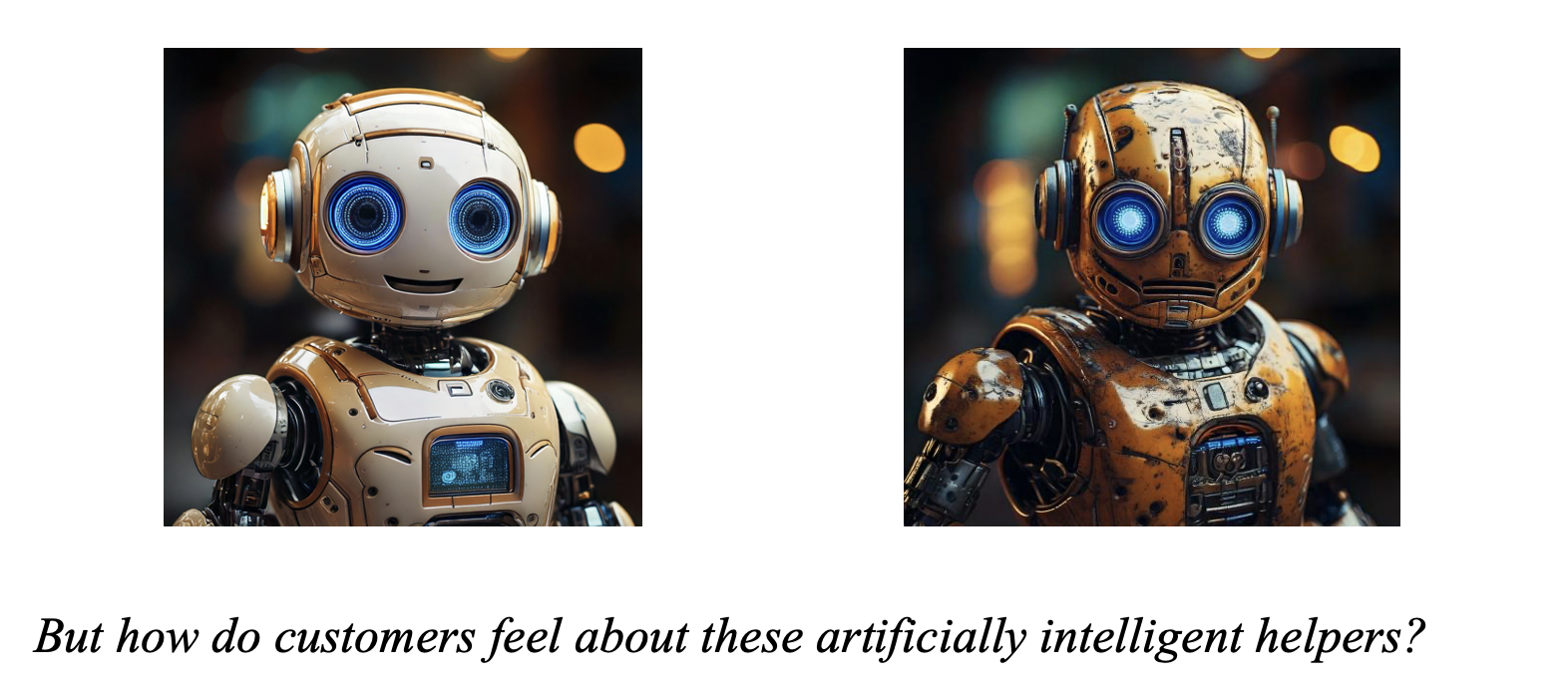
Clearly not everyone is enamoured of them – otherwise the Henn Na hotel in Tokyo, which rose to fame as the world’s first robot-staffed hotel, would not have had to “retire” half its workforce of more than 200 robots. Yet, as consumers become more exposed to these technologies, it is important to look beyond the basic love-hate dichotomy and understand different attitudes towards service robots.
In our recent large-scale study, we analysed multiple sources of data collected over a 12-year period from 34 countries and nearly ninety thousand data-points. We studied people’s attitudes towards service robots in general, as well as their specific perceptions about robots with human and non-human appearances.
We found four types of attitudes, which apply across human-like, formless, and other types of robots. We can describe the attitude types as: “adore” (highly favourable), “abhor” (resistance and negativity), “ignore” (lack of interest) and “unsure” (uncertainty or mixed feelings). Of course, a person may change their views on service robots over time based on their experiences and other factors. But these attitude types emerged consistently across the data sources and time periods in the study.
A good analogy is to think of a person enjoying the summer warmth. They can do so in the shade or sunbathe on the beach, go for a walk or a drive in their convertible. The attitude types in our findings are like these activities or positions – the person may prefer one first, but later change their mind and prefer another. Nonetheless, the types of preferences remain.
Our research shows that in people who are hesitant or unwilling to engage with robots (“abhor”, “ignore”, or “unsure”), attitudes are driven by a fundamental need to connect with other humans, including service staff, rather than AI assistants.
Interestingly, the research revealed that those who are inclined towards the “ignore” attitude respond better to interactions with service robots than those who reflect the “unsure” attitude. This again emphasises the nuance in attitudes that goes beyond people simply loving or loathing these machines.
What next?
Undoubtedly, the technology behind service robots has revolutionary potential. Future versions will probably have even greater influence on consumers’ lives as they seek more personalised services.
Increased personalisation, however, amplifies the already serious concerns about privacy, safety, and ethics of AI applications. This is especially true as AI becomes capable of processing more data on consumers’ incomes, behaviour and health, for example, to tailor marketing material.
The findings from our research may alleviate some of these risks to consumer privacy. Consumers are likely to be more willing to reveal their risk and benefit perceptions about service robots, rather than details of their income, consumption or behaviour.
Businesses could make use of aggregate data (that most of their potential consumers are “unsure”, for example) to target the four attitude types. Overall, this approach could be less intrusive in terms of consumer privacy.
Customers’ broader risk-benefit perceptions about service robots tend to follow this pattern:
o Adore: these people see service robots as offering high benefits at low risk to their privacy
o Abhor: low benefit, high risk
o Ignore: low benefit, low risk
o Unsure: high benefit, high risk
If a business finds that their potential customers are likely to feel unsure or negative about robots, they can focus on combining robot technology with familiar, human-centred service elements. For example, KLM’s service bot is backed up by a team of 250 human staff at the airline, who handle queries that the AI can’t answer. But if potential consumers are likely to be indifferent (“ignore” types), the business can focus on sparking interest by creating memorable experiences featuring service robots, while not positioning them as the entire selling point. And for those who already love robots (the “adore” type), businesses should focus on keeping their loyalty using special perks — as well as maintaining great service. This way, consumers won’t be left feeling that their deep-rooted need for human connection is neglected by businesses in pursuit of the robot revolution.
If you are a consumer who isn’t especially interested or impressed by robots (“abhor”, “ignore”, or “unsure” types), you may want to try the next service robot you stumble across. They may surprise you with their skills or at least be an entertaining distraction. And if they leave you less than satisfied, perhaps other forms of service robots (voice or text-activated, for example, or formless or human-like) may serve your needs better.

Vignesh Yoganathan
Professor of Marketing
Aston University
